We may earn a commission when you buy through links on this page, at no extra cost to you. How this works.
Direct drive wheelbases represent the first serious upgrade for sim racers moving beyond gear-driven or belt-driven systems, but manufacturer spec sheets turn torque output, slew rate, and ecosystem compatibility into marketing fog rather than decision criteria. This guide translates those claims into measurable attributes you can compare across platforms, helping you match wheelbase performance to your driving style and hardware ecosystem without relying on subjective reviews or incomplete product pages.
We focus exclusively on three core specifications: peak and holding torque, slew rate responsiveness, and cross-platform compatibility with your existing pedals, shifters, and button boxes. If you're shopping for a console-compatible wheel under $400 or staying with a gear-driven system, this guide will not address your needs. The criteria here assume you're investing in a PC-based rig and prioritizing force feedback fidelity over plug-and-play convenience.
Marketing terms like "ultra-fast response" and "competition-grade torque" obscure real performance differences between 12 Nm, 15 Nm, and 25 Nm wheelbases, and slew rate figures - when published at all - rarely include the context needed to understand their impact on understeer feedback or curb detail. By the end of this guide, you'll know which torque range suits endurance racing versus rally, how slew rate affects your ability to catch slides, and whether proprietary ecosystems justify their higher upfront costs compared to universal quick-release systems.
Pre-Purchase Checklist: What to Verify Before You Buy
- Cockpit can handle the wheelbase torque rating without flex (check manufacturer load specs)
- Wheel rim compatibility confirmed (quick-release standard, button box support, USB passthrough)
- Power supply requirements and desk/cockpit mounting bolt pattern verified
- Software runs on your OS (Windows/Linux) and supports your sim titles
- Warranty and support infrastructure available in your region
- Budget includes wheel rim, mount, and potential cockpit upgrade if current rig flexes
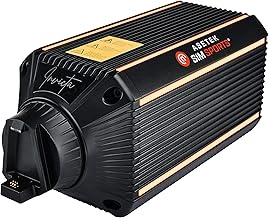
Asetek Invicta Direct Drive Wheel Base 27Nm
The Asetek Invicta Direct Drive Wheel Base delivers 27Nm of peak torque, placing it at the upper end of consumer direct drive bases and offering significant headroom for high-downforce cars and sustained force feedback detail. This torque ceiling supports nuanced road texture and kerb effects without clipping, even when running aggressive force feedback profiles in titles like iRacing or Assetto Corsa Competizione.
Unlike many proprietary ecosystems, the Invicta uses a standard quick-release interface compatible with a wide range of third-party wheels, button boxes, and aftermarket rims. This modularity makes it a strong fit for builders who want to mix components across brands or upgrade steering hardware independently without replacing the entire base. The open design also future-proofs your rig as new rim options enter the market.
Build quality is robust, with a metal housing and solid mounting points that minimize flexion under load. The firmware supports detailed tuning of damping, inertia, and friction curves, giving experienced users granular control over how the base translates game telemetry into physical feedback. Setup requires some familiarity with software configuration, as the base does not ship with preset profiles for every sim title.
At $1,349.00, the Invicta sits between mid-range bases and flagship units, competing directly with models like the Simucube Sport and Fanatec Podium DD1. The value proposition centers on torque output and ecosystem flexibility rather than plug-and-play convenience or bundled wheels. If you prioritize the ability to swap rims freely and want enough torque to handle future sim upgrades, the Invicta offers a balanced foundation without locking you into a single manufacturer's accessory lineup.
- ✅ 27Nm peak torque provides headroom for high-detail force feedback
- ✅ Standard quick-release compatible with third-party wheels and rims
- ✅ Granular firmware tuning for damping, inertia, and friction
- ✅ Metal housing with solid mounting minimizes flex under load
- ⚠️ Setup requires manual tuning; no bundled sim-specific presets
- ⚠️ Higher initial cost compared to entry-level direct drive bases
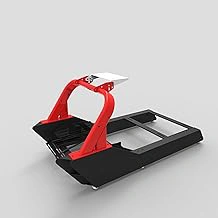
AZRACING CS-Pro Modular Simracing Cockpit
When you upgrade to a direct drive wheelbase, your desk or entry-level rig will quickly become the weak link. The AZRACING CS-Pro Modular Simracing Cockpit addresses this with a rigid aluminum frame designed to handle the forces generated by mid- to high-torque wheelbases without flexing or shifting during hard cornering or sudden force-feedback spikes.
The CS-Pro uses modular construction, allowing you to adjust pedal deck angle, wheel deck height, and seat position to fit different driver sizes and seating preferences. Aluminum extrusion throughout the frame keeps weight manageable while providing the stiffness needed to transfer wheelbase forces cleanly to your hands rather than absorbing them into frame flex. This rigidity matters most when running slew rates above multiple or torque outputs beyond multiple Nm, where even small amounts of cockpit movement dilute the precision you paid for.
Setup involves typical T-slot fasteners and includes pre-drilled mounting points for most direct drive wheelbases and pedal sets. The modular design also means you can reconfigure or add accessories as your setup evolves, though you'll need to source compatible mounting brackets separately if your hardware doesn't match standard hole patterns. At $399.99, the CS-Pro sits in the mid-range for aluminum cockpits, offering a stable foundation without the premium pricing of fully pre-assembled or highly specialized chassis.
If you're moving from a wheel stand or desk mount to your first serious direct drive base, the CS-Pro delivers the rigidity and adjustability required to make that investment worthwhile. The frame won't introduce flex-related feedback loss, and the modular layout adapts to different wheelbases and pedal configurations as your sim racing setup grows.
- ✅ Aluminum construction eliminates flex under high torque and slew rate forces
- ✅ Modular design allows adjustment for pedal angle, wheel height, and seat position
- ✅ Pre-drilled mounting points compatible with most direct drive wheelbases
- ✅ Mid-range pricing at $399.99 for a rigid aluminum frame
- ⚠️ May require separate mounting brackets for non-standard hardware hole patterns
- ⚠️ Assembly involves T-slot fasteners and manual configuration
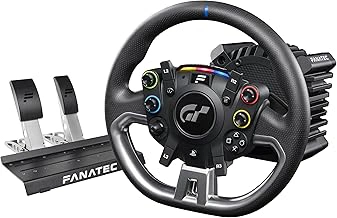
Fanatec Officially Licensed Gran Turismo DD Pro PlayStation Sim Racing Steering Wheel, Base and Pedals – Polyphony Digital Wheel, 5 Nm FluxBarrier Direct Drive, 2-Pedal Set for PC, PS5, PS4
The Fanatec Gran Turismo DD Pro offers PlayStation and PC compatibility in a complete direct drive starter package, pairing a 5 Nm FluxBarrier motor with the Gran Turismo-branded wheel and a two-pedal set. The 5 Nm baseline torque sits at the entry level of direct drive force, delivering smoother detail than belt or gear systems but less raw resistance than higher-output wheelbases - enough for nuanced feedback in circuit racing, though drivers accustomed to heavier steering may find it lighter than expected. The included GT wheel uses a fixed, non-quick-release design, locking you into Fanatec's ecosystem for future wheel upgrades and requiring proprietary pedals and shifters if you expand later.
Platform support is the DD Pro's standout feature: official PlayStation licensing means full compatibility with PS4, PS5, and PC, a rare combination among direct drive wheelbases and valuable if you race on console. The bundled two-pedal set covers brake and throttle with basic load-cell-free feel, adequate for learning racecraft but typically the first component upgraded by committed drivers. Build quality is solid, with a metal quick-release adapter on the base and stable construction, though the wheel rim itself is plastic with rubberized grips rather than Alcantara or leather.
At $799.99, the DD Pro competes as an all-in-one entry point rather than a standalone base, making price-per-component comparison difficult - you pay for console compatibility and convenience, not raw torque-per-dollar. The ecosystem lock-in is a real consideration: upgrading wheels, pedals, or adding a shifter means staying within Fanatec's proprietary connector system, which limits third-party flexibility but ensures plug-and-play simplicity. For PlayStation users stepping up from entry wheels or PC racers wanting console flexibility without piecing together components, the DD Pro delivers working direct drive today; for those prioritizing upgrade flexibility or maximum torque, open-ecosystem bases with higher output and standard USB pedals may fit better long-term.
- ✅ PlayStation 4, PlayStation 5, and PC compatibility in one package
- ✅ Complete starter bundle with wheel, base, and pedals included
- ✅ 5 Nm direct drive motor smoother than belt or gear systems
- ✅ Official Gran Turismo licensing and plug-and-play setup
- ⚠️ 5 Nm torque output lower than most standalone direct drive bases
- ⚠️ Proprietary ecosystem locks future upgrades to Fanatec components
- ⚠️ Fixed wheel design with plastic rim and rubberized grips
- ⚠️ Basic two-pedal set without load-cell brake feel
Who This Guide Is For (And Who Should Look Elsewhere)
This guide is written for sim racers who are ready to move beyond gear-driven wheels like the Logitech G29 or belt-driven options such as the Thrustmaster T300 RS and want to understand what makes a direct drive wheelbase worth the investment. If you're running a rigid cockpit or wheel stand, use a PC as your primary platform, and have a budget between $800 and $2,000 or more, the criteria in this guide will help you compare torque output, slew rate, and ecosystem lock-in across current direct drive options.
Direct drive wheelbases deliver force feedback through a motor connected directly to the steering shaft, eliminating the belts and gears that introduce slack, friction, and delay in entry-level wheels. The result is faster response, finer detail, and higher holding force - but only if your mounting solution can handle the increased torque without flexing or wobbling. A desk clamp or lightweight stand will vibrate and shift under load, masking the precision you're paying for and creating an unsafe setup at higher force settings.
This guide is not intended for casual racers who play a few times a month, console-only users whose platform may limit compatibility or force feedback fidelity, or anyone still using a desk-mounted wheel. If you're not yet committed to a rigid aluminum or steel cockpit, prioritize that upgrade first; the benefits of direct drive depend entirely on a stable mounting foundation. Similarly, if your primary goal is plug-and-play simplicity on Xbox or PlayStation, many direct drive bases require additional adapters, licensed steering wheels, or firmware updates that add cost and complexity beyond the base unit itself.
The decision framework in the following sections assumes you've already confirmed cockpit rigidity, platform compatibility, and a realistic budget that includes not just the wheelbase but also a compatible steering wheel, quick release, and any ecosystem-specific accessories. With those prerequisites in place, you can focus on the performance and integration differences that truly matter.
Torque Output: How Much Force You Actually Need
Torque output, measured in newton-meters (Nm), determines how much rotational force your wheelbase can deliver through the steering rim - but understanding what you actually need requires looking beyond the headline number. Entry-level direct drive wheelbases typically deliver 5 Nm of peak torque, mid-tier models range from 12 to 15 Nm, and high-end units reach 20 Nm or more. For context, most drivers run their wheelbase at 60 - 80% of maximum torque during normal use, meaning a 12 Nm base set to 70% delivers roughly 8.4 Nm of sustained force - more than enough for clear feedback in most racing scenarios.
The common misconception is that maximum torque alone defines a better driving experience, but headroom and sustained force matter more in practice. A wheelbase with higher peak torque can operate comfortably in its mid-range without straining the motor, reducing fade during long sessions and preserving detail at lower settings. If you primarily drive GT cars or formula vehicles on asphalt, 10 - 12 Nm of usable torque provides ample feedback for weight transfer, tire slip, and curb detail. Rally drivers or those who prefer heavy, old-school steering characteristics may benefit from 15 Nm or higher, but the difference is about preference and specific car types, not objective superiority.
Realistic driving feedback comes from the clarity and speed of force changes - attributes tied to slew rate and motor control - not just the absolute magnitude of torque. A 10 Nm wheelbase with clean, fast response will often feel more communicative than a 20 Nm unit with sluggish motor behavior or coarse force steps. When evaluating torque specs, consider your typical car selection, whether you value subtle detail or raw physicality, and how much force you can comfortably manage during hour-long races without fatigue. The key takeaway: choose torque capacity that gives you comfortable headroom for your driving style, not the highest number on the spec sheet.
Slew Rate: Why Response Speed Matters More Than Peak Torque
Slew rate measures how quickly a wheelbase can change torque output, typically expressed in newton-meters per millisecond (Nm/ms) or degrees per second of rotation speed. While peak torque tells you the maximum force the motor can deliver, slew rate determines how fast the wheelbase can ramp up, reverse, or modulate that force in response to steering input or simulation data. A high slew rate translates to sharper feedback when you clip a kerb, lose rear grip mid-corner, or transition from understeer to overstep, making subtle tire slip and road texture feel immediate rather than laggy or smoothed over.
Manufacturers rarely publish slew rate specifications because the metric depends on motor design, controller firmware, communication protocol speed, and power supply capacity working together. A direct drive unit with 15 Nm peak torque but a slow slew rate may feel heavy yet vague, delivering the sensation of weight without the crisp detail that tells you exactly when the front tires begin to understeer or the rear steps out. Conversely, a base with 10 Nm and a fast slew rate can communicate tire load changes and road surface texture with clarity, even if it lacks the absolute force of a larger motor.
In practical terms, slew rate is the difference between feeling the road and just feeling resistance. When a simulation sends a signal that the car has hit a bump or the front tires are scrubbing, a wheelbase with high slew rate delivers that information as a distinct, immediate impulse through the rim. A slower unit will smooth the same signal into a duller, more generalized push or pull, making it harder to catch a slide or place the car precisely on a racing line. If your driving style prioritizes fine control and early correction over brute force, prioritize wheelbases known for responsive feedback - even if that means accepting slightly lower peak torque - and look for user reviews or community feedback that mention detail, clarity, or texture rather than simply strength.
Ecosystems and Compatibility: Fanatec, Simagic, Moza, and Open Standards
Direct drive wheelbases fall into two broad camps: closed ecosystems where the manufacturer controls most or all compatible peripherals, and open or modular systems that welcome third-party steering wheels, button boxes, and quick-release adapters. Fanatec operates a closed ecosystem - its wheelbases use a proprietary pin-out that requires official Fanatec steering wheels or aftermarket adapters, locking you into their product line for plug-and-play convenience. Thrustmaster follows a similar model, though its ecosystem is smaller and mostly limited to its own wheels and shifters. This approach delivers seamless integration and firmware updates but restricts your upgrade path unless you add compatibility layers or replace the entire setup.
Simagic, Moza, and Asetek take a modular approach: their wheelbases ship with quick-release systems that accept USB steering wheels or their own branded rims, and many third-party button boxes connect directly via USB hubs or the base's pass-through ports. Simagic uses a proprietary quick-release but supports standard USB wheels with an adapter; Moza offers both its own QR system and compatibility with aftermarket options like NRG or D1-Spec quick-releases through simple bolt-on conversion kits. Asetek bases are entirely agnostic - any USB wheel with a 70 mm or 50.8 mm bolt pattern will mount and function without additional adapters. This flexibility lets you mix brands, upgrade steering wheels independently, and add button boxes or dashboard displays without waiting for the wheelbase manufacturer to release new accessories.
Quick-release compatibility is the practical heart of ecosystem choice. Closed systems guarantee that every button, paddle, and rotary encoder will work the moment you plug it in, with no driver conflicts or pin-mapping required. Open systems demand a bit more setup - USB wheels need their own drivers, and you may spend ten minutes configuring button IDs in your sim software - but reward you with access to hundreds of aftermarket rims, ranging from budget replicas to high-end carbon-fiber GT wheels. If you plan to own multiple steering wheels or want the freedom to buy from specialty builders, an open or modular ecosystem saves money and headaches in the long run. If you value simplicity and want a single-vendor support channel, a closed ecosystem reduces troubleshooting and keeps firmware updates automatic.
Lock-in risk grows over time. A Fanatec wheelbase purchased today will require Fanatec wheels tomorrow, and if the company discontinues a product line or raises prices sharply, your options narrow. Modular systems spread that risk across multiple suppliers - you can replace a steering wheel, pedal set, or button box from any manufacturer without touching the wheelbase. For budget-conscious upgraders, this means you can start with an entry-level USB wheel and swap it for a premium rim two years later without selling the base. For enthusiasts building multi-discipline rigs, it means owning a formula wheel, a GT wheel, and a rally wheel from three different brands, all sharing the same quick-release and USB hub.
The best ecosystem is the one that matches your upgrade horizon and technical comfort. If you want to unbox, mount, and race within an hour, closed systems deliver that experience. If you enjoy researching components, tweaking configurations, and maximizing value across brands, open or modular platforms offer the flexibility to build exactly the setup you want, one piece at a time.
Common Mistakes: Overbuying Torque and Ignoring Your Cockpit
Many first-time buyers choose a wheelbase by torque number alone, then discover their cockpit flexes, their wheel rim is incompatible, or the total system cost exceeds their budget. Avoiding these mistakes starts with understanding that the wheelbase is only one part of a complete force-feedback chain.
Overbuying torque without adequate cockpit rigidity is the most common error. A 20 Nm base mounted to a desk or a flex-prone aluminum profile rig will transmit forces into the structure instead of your hands, causing oscillation, noise, and a disconnected feel. If your cockpit frame twists or your wheel deck bounces under load, you will not feel the detail the motor can deliver. Plan cockpit upgrades - reinforced brackets, thicker extrusion, or a dedicated wheel deck - before or alongside a high-torque purchase.
Ignoring slew rate in favor of peak torque is another frequent oversight. A 15 Nm base with 3+ Nm/ms slew rate will feel sharper and more communicative than a 20 Nm unit that ramps slowly. If your priority is rally, drifting, or catching slides, slew rate should weigh equally with peak output in your decision.
Assuming all wheel rims fit all bases leads to expensive surprises. Quick-release standards - 70 mm bolt pattern, USB pass-through, wireless protocols - vary by ecosystem. A Fanatec wheel will not mount to a Moza base without an adapter, and adapters often disable button functionality or force-feedback tuning. Verify compatibility for every rim you plan to use, or commit to staying within one ecosystem.
Underestimating total system cost is the final trap. The wheelbase price is only the starting point. Add a quality wheel rim, a quick-release or hub adapter, mounting hardware, and potential cockpit reinforcement. A $600 wheelbase can become a $1,200 system once all components are in place. Budget for the complete chain before you commit to a base, so you avoid halfway upgrades or mismatched parts that limit performance.
By recognizing these mistakes early, you can allocate budget and attention where they matter most: rigidity, slew rate, compatibility, and total system balance rather than peak torque alone.
Final Takeaway: Match Your Wheelbase to Your Cockpit and Goals
The best direct drive wheelbase is not the one with the highest torque spec, but the one that fits your cockpit, software ecosystem, and upgrade plan. Torque headroom - choosing a wheelbase rated well above your typical driving forces - ensures smooth operation and longevity. Slew rate determines how quickly you feel changes in grip and load, shaping the quality of feedback rather than just its strength. Ecosystem choice locks you into a specific range of steering wheels, button boxes, and accessories, so prioritize compatibility with the peripherals you plan to add over time.
Cockpit rigidity is non-negotiable. Even a mid-range wheelbase will transmit inconsistent, rattling feedback through a flex-prone rig, wasting the precision you paid for. Secure the wheelbase firmly, ensure the mounting plate does not twist under load, and verify that your pedal tray stays planted during heavy braking. A stable platform turns raw motor output into usable information.
Match your wheelbase to your goals. If you drive a variety of cars and want room to grow, a 12 - 15 Nm unit with modern slew rate offers the best balance. If you focus on a single discipline or have space and budget constraints, a well-implemented 8 - 10 Nm wheelbase on a rigid mount will outperform a poorly installed high-torque option. Evaluate torque, slew rate, and ecosystem together, then choose the combination that supports the cockpit you have and the upgrades you want to make next.