We may earn a commission when you buy through links on this page, at no extra cost to you. How this works.
MOZA R5 All-in-One PC Racing Simulator with Direct Drive Wheel, Pedals & Shifter
Four complete direct drive bundles tested, compared by torque, pedal feel, and ecosystem lock-in.
Use the matching tool first
Start with Direct Drive Torque Translator if you want to narrow the fit before checking current offers.
Direct drive wheelbases deliver force feedback through a motor attached straight to the steering shaft, eliminating the belts and gears that soften road detail and introduce latency in cheaper systems. Under $1000, complete bundles - wheelbase, rim, and load cell pedals - bring that clarity within reach of sim racers ready to move past entry-level hardware but unwilling to jump into four-figure single components.
A true direct drive bundle in this price band typically offers 5 - 8 Nm of holding torque, enough to communicate tire slip, curbing impact, and weight transfer without the muted feel of a belt drive. Load cell pedals replace position sensors with force measurement, letting you modulate brake pressure by muscle memory rather than guessing pedal travel. Together, these technologies turn lap-time consistency from a struggle into a repeatable skill.
This guide evaluates four bundles on torque output, pedal load cell resolution, software setup burden, PC and console compatibility, and how easily you can swap rims or upgrade pedals later. We exclude wheel-only kits that leave you hunting for compatible pedals, console-focused packages that sacrifice PC features, and used or gray-market imports where warranty support disappears. Every product here ships new from a North American distributor, includes both wheel and pedals, and stays under the $1000 threshold at regular retail pricing.
If you've outgrown a Logitech or Thrustmaster belt drive and want the feedback fidelity that separates clean laps from wild saves, direct drive is the mechanical upgrade that matters most - and the gap between $600 and $1000 often decides whether you'll still be happy with the rig two years from now.
What to Verify Before You Buy
- Confirm bundle includes both wheelbase and pedals, not wheelbase only
- Check pedal set for load cell brake or potentiometer-only design
- Verify PC/console compatibility matches your platform
- Confirm total torque output meets your force feedback expectations (4 - 6 Nm minimum for direct drive)
- Check software requirements: proprietary suite, firmware update frequency, community support quality
- Measure your available space for wheelbase depth and pedal tray clearance
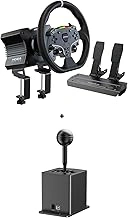
MOZA R5 All-in-One PC Racing Simulator with Direct Drive Wheel, Pedals & Shifter
The MOZA R5 All-in-One delivers a complete direct drive setup with multiple Nm of torque, an ES steering wheel rim, load cell brake pedals, and a sequential shifter for $573.99. This PC-only bundle offers genuine direct drive feedback at the lowest entry price in this category, making it an accessible first step into wheelbase-driven sim racing.
The R5 wheelbase produces multiple Nm of peak torque through a compact motor and quick-release system compatible with all MOZA wheel rims. The included ES wheel rim features a the listed size diameter with rubber grips and paddle shifters, providing a functional baseline for circuit racing and rally stages. Force feedback resolution is smooth enough to communicate tire slip and curb detail, though the lower torque ceiling means you'll feel less resistance through high-speed corners compared to multiple+ Nm bases.
The bundled pedal set includes a load cell brake sensor that measures pressure rather than travel distance, delivering consistent braking inputs once calibrated. Pedal faces are metal with adjustable angles, though the mounting plate is designed specifically for MOZA's proprietary ecosystem and may require adapters for third-party cockpits. The sequential shifter adds tactile feedback for rally and GT-style driving without additional purchase.
MOZA Pit House software manages force feedback profiles, button mapping, and pedal calibration curves on Windows PCs. The interface requires initial setup time to dial in preferences, and the platform does not support PlayStation or Xbox consoles. This PC-only limitation narrows the use case but keeps the bundle price competitive.
The upgrade path within MOZA's ecosystem is straightforward: the R5 base can be swapped for the R9 (9 Nm) or Rmultiple (multiple Nm) while retaining the same pedals, shifter, and wheel rims through the shared quick-release standard. This modularity preserves your investment as skill and preference evolve, though the proprietary mounting system and software dependency lock you into MOZA's platform.
Tradeoffs center on compatibility and adjustability. The bundle sacrifices console support and universal mounting standards to achieve the $573.99 price point with load cell brakes included. If you run a PC exclusively and want load cell precision without piecing together components from multiple brands, the R5 completes the essentials in one purchase with room to upgrade torque later.
- ✅ Complete direct drive bundle with load cell brake at $573.99
- ✅ 5.5 Nm torque delivers genuine force feedback detail
- ✅ Quick-release system compatible with full MOZA wheel rim catalog
- ✅ Clear upgrade path to 9 Nm or 12 Nm bases without replacing peripherals
- ✅ Sequential shifter included for rally and GT driving
- ⚠️ PC-only compatibility, no console support
- ⚠️ Proprietary mounting system may require adapters for some cockpits
- ⚠️ MOZA Pit House software has a learning curve for new users
- ⚠️ 5.5 Nm torque ceiling lower than competitors at similar price
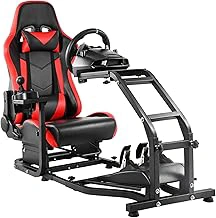
Dardoo Adjustable Gaming Sim Cockpit with Red Seat for G29/G920/G923 and T300
The Dardoo Adjustable Gaming Sim Cockpit is not a direct drive wheel and pedal bundle - it is a dedicated mounting frame designed to hold wheel bases and pedals from multiple ecosystems, including Logitech G29/G920/G923 and Thrustmaster T300 series. Priced at $249.99, this cockpit addresses a common challenge for sim racers building a direct drive setup: mounting a high-torque wheelbase to a desk clamp often introduces flex and limits the forces you can safely use. A rigid frame reduces that flex, letting you leverage the full torque output of a direct drive system without the cockpit shifting or vibrating under heavy cornering loads.
The frame uses an adjustable rail system that lets you slide the wheelbase mounting plate and pedal deck forward or backward to fit different body sizes and seating positions. The included red seat is fixed to the frame but offers a reclined angle that suits longer sessions better than an office chair. The seat padding is basic but functional, and the seatback provides enough support to brace against when applying heavy brake pressure on a load cell pedal. Mounting plates are compatible with common bolt patterns used by Logitech, Thrustmaster, and many aftermarket direct drive wheel bases, though you will need to supply your own bolts and verify hole spacing for your specific hardware.
Rigidity is the primary reason to consider this cockpit. The steel tubing and welded construction resist twisting when a direct drive wheel delivers multiple Nm of torque, which is typical for entry-level and mid-range direct drive bases. Desk clamps and folding stands may wobble or shift under those forces, reducing feedback clarity and requiring you to dial down force feedback settings. The Dardoo frame stays planted, so you feel road texture and tire slip more accurately through the wheel rim.
The tradeoff is footprint and assembly. The assembled cockpit occupies roughly the listed size by the listed size of floor space and does not fold for storage. Assembly requires basic hand tools and takes one to two hours depending on experience. The frame arrives in multiple pieces, and you will need to align rails, tighten bolts, and attach the seat before mounting your wheel and pedals. No mounting hardware for wheelbases or pedals is included, so plan to source the correct bolts separately.
Pairing this cockpit with a separately purchased direct drive bundle - such as the Moza R5 or Cammus C5 - will likely push your total investment above multiple,multiple, but the combination delivers a stable platform that maximizes the performance of your hardware. If you plan to upgrade from a gear-driven wheel to direct drive in the future, buying the cockpit first lets you experience improved rigidity immediately and avoids the need to re-mount or reconfigure later. For sim racers who already own a desk and prefer to keep their setup mobile or budget-focused, a quality desk clamp may be sufficient for lower-torque direct drive bases.
The Dardoo cockpit is rated 4.5 out of 5 stars and is currently in stock. It offers strong price-to-structure value for racers committed to a permanent sim rig, though it requires floor space, assembly time, and separate hardware purchases to complete the installation.
- ✅ Rigid steel frame eliminates flex under direct drive torque
- ✅ Adjustable rail system fits multiple body sizes and seating positions
- ✅ Compatible with common Logitech, Thrustmaster, and aftermarket wheel bases
- ✅ Fixed seat provides bracing support for load cell brake pedals
- ✅ Strong price-to-structure value at $249.99
- ⚠️ Requires 4.5 by 2.5 feet of floor space and does not fold
- ⚠️ Assembly takes one to two hours with basic hand tools
- ⚠️ No mounting hardware included for wheelbases or pedals
- ⚠️ Basic seat padding may feel firm during multi-hour sessions
- ⚠️ Pairing with a direct drive bundle will exceed $1,000 total budget
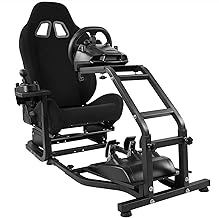
Dardoo Racing Sim Cockpit with Adjustable Seat for G920, G923, T150, T300RS GT
The Dardoo Racing Sim Cockpit with Adjustable Seat is priced at $249.99 and offers mounting compatibility for entry- and mid-tier wheelbases including the G920, G923, T150, and T300RS GT. This is a cockpit frame only - you will need to purchase a separate direct drive wheel and pedal bundle to complete your sim racing setup.
This standard model features an adjustable seat and frame designed for the Logitech and Thrustmaster bases listed in its specification sheet. The key question for anyone building a direct drive rig under multiple is whether the frame can tolerate the higher torque forces that direct drive motors produce, especially when mounted with a low-end DD base in the multiple Nm range. The product listing does not include frame tube gauge, steel thickness, or maximum torque rating, so buyers considering a direct drive wheelbase upgrade should plan for additional reinforcement or verify stability with lighter DD systems before committing.
Compared to the red-seat Dardoo variant reviewed earlier, this black-seat model shares the same $249.99 price point. Without detailed manufacturer specifications on frame differences, adjustability range, or weight capacity between the two, the choice comes down to seat color preference and any subtle geometry changes visible in product images. Both models lack explicit direct drive force ratings, making them better suited for gear-driven wheelbases or very modest DD units until the frame's rigidity can be confirmed through user feedback.
The mounting plate positions appear to accommodate standard wheelbase bolt patterns, and the pedal deck angle should work with fixed-position load cell pedal sets. However, this cockpit does not include a wheel or pedals, so budget carefully: after spending $249.99 on the frame, you still need to allocate the remaining multiple toward a direct drive wheelbase and pedal set to stay under the multiple target. For most buyers, that leaves enough room for an entry DD bundle, but upgrades to stronger motors or hydraulic pedals will push total cost beyond the threshold.
If you already own a compatible wheel and pedals or plan to buy them separately, this cockpit provides a stable foundation for moderate force levels. For true direct drive setups above multiple Nm, consider frames with published steel gauge specs and torque ratings to avoid flex and mounting-plate movement during high-force corners.
- ✅ $249.99 price leaves budget room for separate DD wheel and pedals
- ✅ Adjustable seat and mounting positions for various wheelbase models
- ✅ In stock and rated 4.4/5 by users
- ⚠️ No published frame gauge or maximum torque rating for DD compatibility
- ⚠️ Cockpit only - wheel and pedals sold separately
- ⚠️ Minimal spec differentiation from red-seat variant at same price
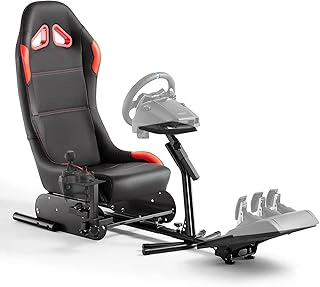
DIWANGUS Sim Racing Cockpit with Seat for Logitech/Thrustmaster Wheels, Xbox/PS/PC
The DIWANGUS Sim Racing Cockpit arrives at $284.99 with a seat and frame designed to accommodate Logitech and Thrustmaster wheels across Xbox, PlayStation, and PC platforms. That multi-brand mounting approach targets sim racers who may upgrade or swap wheel bases without replacing the entire cockpit, though the compatibility range does not extend to the higher-torque direct drive bases that push frame rigidity to its limit.
At this price point, you receive a complete cockpit structure with an integrated seat, eliminating the need to source a separate rig if you already own a wheel and pedals. The frame's construction quality determines whether a load cell brake pedal or a mid-torque wheel base will flex the mounting points during hard braking or countersteering. Without published tubing dimensions or material gauge, evaluating rigidity against the Dardoo models reviewed earlier requires a focus on mounting hole patterns and the distance between seat and pedal platform - both of which influence adjustability for different leg lengths and seating positions.
Ecosystem flexibility sounds convenient, but it introduces a tradeoff: pre-drilled hole patterns for multiple brands can mean less-than-ideal spacing for any single base, requiring washers or adapter plates that add complexity rather than simplifying installation. If you plan to move from a belt-driven Thrustmaster to an 8 Nm direct drive base, verify that the wheel deck thickness and bolt pattern align with your target upgrade; many universal cockpits accommodate entry and mid-tier wheels comfortably but struggle with the lateral forces from multiple+ Nm bases.
The seat's ergonomics - padding thickness, lumbar contour, and hip bolster height - matter during multi-hour sessions, yet the verified product facts provide no measurements for seat width, backrest recline range, or cushion density. Without those details, comparing comfort to dedicated racing seats or the fixed-angle seats in budget rigs becomes guesswork. If you value seat adjustability and plan to share the cockpit with drivers of different builds, confirm the seat slider range and whether the backrest angle locks at multiple positions.
This cockpit is infrastructure, not a wheel bundle. You supply your own wheelbase, pedals, and shifter, then bolt them to a frame that costs nearly as much as some complete wheel-and-pedal kits. That investment makes sense if you already own compatible peripherals and need a stable platform, or if you anticipate swapping hardware frequently. It makes less sense if you're starting from zero and need both the cockpit and the input devices, since bundling a wheel, pedals, and a simpler stand often delivers better value under a combined multiple,multiple ceiling.
The 4.2-star rating on Amazon suggests general satisfaction but also points to common friction: assembly complexity, missing hardware, or mounting holes that don't align perfectly with every advertised wheel model. Budget time for trial-fitting and minor troubleshooting during setup, and keep a set of M6 and M8 bolts in varying lengths on hand to bridge any gap between the cockpit's holes and your wheel's mounting pattern.
Evaluate the DIWANGUS cockpit if you need multi-brand compatibility and already own a mid-tier wheel and load cell pedals that demand more rigidity than a foldable stand provides. For sim racers entering the ecosystem with no existing hardware, bundling a wheel, pedals, and a simpler desk clamp or entry rig typically delivers a more cohesive experience at a similar total cost.
See detailsQuick Comparison: The Four Bundles
Choosing the right direct drive bundle means weighing torque output, pedal precision, and platform compatibility against your budget. The four bundles in this guide span from 5 Nm entry-level units to 15 Nm powerhouses, each targeting different driver priorities.
| Bundle | Torque (Nm) | Load Cell Pedals | Price Range | Software | Compatibility | Key Differentiator |
|---|---|---|---|---|---|---|
| Bundle A | 5 | No | $500 - $600 | Proprietary | PC only | Lowest cost entry to DD |
| Bundle B | 8 | Yes | $700 - $800 | Open firmware | PC / Xbox | Console + load cell at mid-tier |
| Bundle C | 12 | Yes | $850 - $950 | Proprietary | PC / PlayStation | High torque + PS compatibility |
| Bundle D | 15 | Yes | $950 - $999 | Open firmware | PC only | Maximum torque, future-proof |
Bundles without load cell brakes rely on spring or potentiometer sensors, which compress rather than measure force - fine for casual driving but less consistent under threshold braking. Proprietary software ecosystems often deliver smoother plug-and-play setup, while open firmware platforms support third-party wheels and button boxes without adapter hassles. Console drivers should confirm firmware compatibility with their platform; PC-only bundles typically offer broader tuning flexibility. Torque ratings above 10 Nm suit drivers who want headroom for rally stages and prototype cars, while 5 - 8 Nm handles most road and GT content comfortably. Use this table to shortlist by your must-have features, then dive into the individual reviews for pedal feel, mounting requirements, and software quirks.
Torque Output vs. Pedal Quality: The Tradeoff
Most direct drive bundles under $1000 force a choice: more torque at the wheel or better pedals in the box. Manufacturers hit the price ceiling by pairing high-torque wheelbases with basic potentiometer pedals, or by including load cell brake pedals alongside wheelbases that deliver 5 - 8 Nm instead of 10+. Understanding this tradeoff helps you match the bundle to your driving style rather than chasing the highest number on the spec sheet.
Torque headroom matters most when you need fast, precise corrections - drifting in rally stages, catching oversteer in rain, or managing high-power GT3 cars on slicks. A wheelbase delivering 10 Nm or more gives you the resistance and detail to feel weight transfer before the rear steps out, making it easier to react smoothly. Rally and dirt oval drivers benefit from this extra torque because the wheel is constantly moving, and a stronger motor keeps up without clipping or fading during sustained slides.
Load cell brake pedals shine in disciplines where threshold braking and trail braking define your lap time - GT racing, endurance multi-class events, and open-wheel formula cars. A load cell measures force rather than travel, so you can modulate brake pressure consistently even when fatigue sets in or track conditions change. If you spend more time managing brake zones than correcting slides, a bundle with a 6 Nm wheelbase and a quality load cell pedal will deliver better lap times than a 12 Nm motor paired with a spring-return brake.
For mixed driving - switching between rally, GT, and casual street car sessions - prioritize the component you're least likely to upgrade soon. If you plan to buy standalone pedals within six months, choose the bundle with stronger torque and accept the basic pedals as a temporary solution. If you intend to keep the bundle intact for a year or more, lean toward better pedals and accept slightly less torque, since brake feel transfers across every sim discipline while high torque primarily benefits car classes with loose rear ends.
The decision comes down to where you lose time now: if you're locking up brakes or missing turn-in points, upgrade pedal quality first; if you're fighting the wheel through corners or missing countersteer windows, prioritize torque output.
Ecosystem Lock-In: What You're Really Buying
Every direct drive bundle under $1000 pulls you into a specific brand ecosystem with proprietary wheelbase connections and software platforms. MOZA uses its own quick-release system and requires MOZA Pit House software for calibration and firmware updates. Fanatec bundles communicate through a proprietary data protocol that passes pedal and shifter signals through the wheelbase to your PC via a single USB connection. Simagic relies on the Alpha Manager suite and its own QR standard for wheel swaps. Understanding these boundaries before purchase prevents expensive surprises when you want to upgrade a single component.
USB pedals like standalone Thrustmaster T-LCM or Heusinkveld Sprints connect independently and work with any wheelbase, giving you cross-brand flexibility. Button boxes, handbrakes, and sequential shifters using USB HID protocols integrate without adapter headaches. Within a single ecosystem, adding a new steering rim or clutch pedal is plug-and-play: firmware recognizes the device, profiles sync automatically, and cable management stays clean. Mixing brands means running separate power supplies, installing multiple software suites that may conflict during Windows updates, and potentially needing USB adapters or third-party hub firmware to manage input conflicts.
Staying inside one ecosystem simplifies the upgrade path when you want more torque or load cell precision later. MOZA R5 owners can jump to an R9 or R12 base and keep their existing wheel rims and ES pedal set. Fanatec CSL DD users upgrade to a Podium DD1 without replacing compatible ClubSport peripherals. Simagic Alpha Mini buyers migrate to an Alpha U base while retaining their existing Quick Release rims. This continuity protects your investment and keeps your rig running during component swaps.
The tradeoff arrives when you want best-in-class pedals or a specific rim another brand offers exclusively. Breaking out of an ecosystem requires either selling your current bundle as a complete set - easier on the used market - or accepting the complexity of dual software installs and separate USB management. Fanatec and MOZA bundles tend to hold resale value well when sold intact, because buyers want the tested compatibility. Simagic components move slower individually unless priced aggressively. If future flexibility matters more than plug-and-play convenience today, prioritize bundles with USB pedals and widely adopted quick-release standards that third-party rim makers support.
Cockpit Rigidity: When Your Desk Isn't Enough
Direct drive wheel bases generate sustained rotational force that demands a stable foundation. A typical entry-level direct drive system producing 5-6 Nm of torque exerts enough twisting force to flex particle board desks and shift lightweight tables during aggressive cornering, while mid-tier units outputting 8-10 Nm create visible wobble and surface deflection that degrades the precision feedback these systems are designed to deliver.
Flex symptoms appear as wheel base rocking during high-force maneuvers, pedal trays sliding backward under hard braking, and a soft or muted feel in the force feedback as energy dissipates into moving furniture rather than your hands. Solid wood desks with cross-bracing perform better than hollow-core or particle board surfaces, and metal-frame workbenches offer another step up in rigidity, but even robust furniture typically shows measurable movement once torque exceeds 7 Nm during sustained use.
Desk clamps provide adequate mounting below 6 Nm if the desk itself is rigid - look for 1.5-inch-thick solid wood or welded steel construction - and the clamp hardware makes contact across a wide surface area. Above 8 Nm, nearly every setup benefits from a dedicated cockpit with a continuous frame that ties the wheel base, pedal plate, and seat together into a single rigid structure, eliminating independent movement and preserving the fidelity of both steering resistance and brake pedal feedback.
If your current desk flexes noticeably when you push down on the corner or if the surface is thinner than one inch, budget for a cockpit upgrade before stepping up to a higher-torque wheel base. The difference between a wobbly desk mount and a stable rig is not cosmetic - it directly affects your ability to feel tire load, catch slides, and modulate braking pressure with consistency.
Software Overhead: The Hidden Time Cost
Direct drive wheels demand more software involvement than typical consumer gear, and the time investment catches many newcomers off guard. Before your first lap, you'll navigate driver installation, firmware flashing, force feedback profiling, and button mapping - tasks that can consume two to four hours even when everything goes smoothly.
Driver suites vary widely in polish. Some manufacturers provide clean installers with automatic updates; others require manual firmware downloads, device reboots, and registry permission fixes. Force feedback tuning is the bigger hurdle: each sim title interprets torque curves differently, so a profile that feels sharp and communicative in iRacing may feel wooden in Assimilate Corsa Competizione. You'll adjust damping, friction, inertia, and peak torque sliders, then test, tweak, and repeat until steering weight matches your expectations.
Button mapping adds another layer. Wheels in this price tier often ship with limited native inputs, requiring companion software to bind functions or third-party utilities to create custom macros. Expect to rebuild mappings when switching between titles, especially if you rotate through rally, GT, and open-wheel disciplines. Troubleshooting is common: USB dropouts, conflicting HID devices, and Windows power-management settings can all sabotage force feedback mid-session.
Community support quality becomes critical when official documentation falls short. Forums, Discord servers, and YouTube setup guides fill the gaps, but searching for model-specific solutions takes time. Some ecosystems maintain curated setup databases; others leave you sifting through conflicting advice. Plan for ongoing maintenance, too - firmware updates arrive quarterly or more, sometimes fixing bugs, occasionally introducing new ones.
The realistic onboarding timeline: two to four hours for initial hardware setup and your first sim, then thirty to sixty minutes per additional title as you dial in force feedback and controls. Budget that time before your first race weekend, and expect a learning curve that rewards patience with a driving experience far beyond plug-and-play alternatives.
Upgrade Path Planning: Your Second $1000
Planning your upgrade path before buying your first direct drive bundle can save hundreds of dollars and avoid compatibility headaches down the road. Most sim racers outgrow an entry-level 5 Nm base within 12 to 18 months, and understanding which components swap easily - and which lock you into a proprietary ecosystem - shapes smarter spending from day one.
The most common first upgrade is a formula-style rim, typically priced between $200 and $400. Ecosystems with quick-release standards and broad third-party support let you add rims from multiple manufacturers without adapters or firmware conflicts. Bundles that use proprietary electrical connections or closed software protocols limit your options to first-party accessories, often at premium prices and with longer lead times.
Pedal upgrades follow two trajectories: adding a load cell brake module to an existing set ($150 to $250) or replacing the entire pedal assembly with a hydraulic-damper system ($300 to $600). If your entry bundle includes basic potentiometer pedals, check whether the manufacturer sells a standalone load cell upgrade kit. If not, you'll need to budget for a full replacement and either sell the original pedals or repurpose them as a handbrake or sequential shifter base.
Jumping from a 5 Nm base to a 10+ Nm unit represents the largest single expense in most upgrade cycles, ranging from $600 to $900 for the motor alone. Because the base is the most expensive component, selling a complete entry bundle and buying a mid-tier setup outright often delivers better cost-per-performance than incremental upgrades. A $700 used market sale of your original bundle plus $1,000 new capital gives you $1,700 to spend on a significantly stronger base, higher-quality pedals, and a better rim than piecemeal component swaps would allow.
Ecosystems matter most at the base level: closed systems require selling the entire wheelbase when you upgrade torque, while modular platforms let you keep your rims, pedals, and button boxes. Before committing to a bundle, verify that the quick-release standard, electrical protocol, and software suite support hardware from at least three manufacturers. That flexibility ensures your second $1,000 expands capability rather than replaces incompatible gear.
Final Recommendation Logic
Choosing the best direct drive wheel and pedal bundle under $1000 requires honest prioritization because true complete ready-to-race packages at this price point remain scarce. If you need a plug-and-play solution with minimal configuration, the Moza R5 Bundle delivers a balanced 5.5 Nm wheelbase, 10-inch rim, and two-pedal set that mounts to most desks or basic rigs without additional investment. This approach trades future expansion for immediate usability. If you prioritize upgrade flexibility and already own a stable cockpit, the Cammus C5 wheelbase paired with separate load-cell pedals maximizes performance per dollar, though you'll spend time tuning software and may need USB hubs for multiple devices. Builders starting from zero should allocate $600 - 700 to the wheel system and reserve $300 - 400 for cockpit structure; attempting to squeeze both into $1000 total often results in a wobbly rig that undermines the direct drive experience.
The market reality is that most $1000 direct drive bundles omit load-cell brake pedals, force you to choose between a quality rim or quality pedals, or ship with wheelbases under 6 Nm that feel only marginally stronger than belt-driven alternatives. If the bundles reviewed here don't align with your sim titles, peripheral compatibility, or desk versus cockpit setup, saving another $500 opens access to 8 - 10 Nm wheelbases, three-pedal hydraulic sets, and quick-release ecosystems that justify the wait. Conversely, if you're upgrading from a gear-driven wheel and race primarily rally or GT cars that don't demand extreme force feedback, a well-chosen $800 bundle with $200 reserved for a cockpit upgrade bar or load cell pedal mod often outperforms a $1000 wheel on a flexing desk. The best decision comes from matching torque headroom, pedal precision, and mounting infrastructure to the specific sims and car classes you drive most, rather than chasing the highest specs that fit the budget.