We may earn a commission when you buy through links on this page, at no extra cost to you. How this works.
Moving from a gear-driven wheel to direct drive isn't just about more force - it's about clarity. A direct drive wheelbase under 12Nm delivers enough torque to communicate weight transfer, slip angle, and road texture without the mechanical noise of gears or belts, while keeping the forces manageable on mid-tier cockpits and desk mounts that many upgraders already own.
The 12Nm threshold exists because it sits at the intersection of usable feedback and practical hardware demands. Most drivers exploit 6 - 8Nm during normal racing; peaks above that range are reserved for catching slides or heavy vehicles. Wheelbases rated at 15Nm or higher require stiffer rigs to avoid flex, cost substantially more, and often deliver diminishing returns unless you're chasing the last tenth of immersion or running endurance events in high-downforce cars.
A 'first serious upgrade' means you're leaving behind entry-level gear-driven systems - Logitech G29, Thrustmaster T300 - and committing to a platform that will grow with your skill. You want a base that pairs with quality wheels and pedals today, supports firmware updates, and doesn't force you into a closed ecosystem where every accessory must come from one manufacturer. The trade-off isn't just about peak torque; it's about resolution at lower forces, latency, and whether the platform allows you to swap wheels, add button boxes, or integrate third-party peripherals without adapters or workarounds.
Three variables define the right choice in this category: peak torque versus the granularity of force feedback at everyday driving forces, ecosystem openness (proprietary quick-release and USB hubs versus universal standards), and compatibility with future pedal sets, shifters, and wheel rims as you refine your setup. Understanding these trade-offs keeps you from either overbuying torque you can't use or locking into a platform that limits your next steps.
Quick comparison
| Cooler Master x Simucube 2 Pro Direct Drive Wheelbase – 25Nm High-Torque Force Feedback, Ultra-Precise Direct Drive, Pro Sim Racing Performance, Low Latency, PC Compatible | Check current price |
| MOZA R12 V2 Direct Drive Sim Racing Wheelbase Servo Base | Check current price |
| MOZA R3 Racing Simulator 4-Piece Wheel & Pedals Bundle | Check current price |
Use the matching tool first
Start with Sim Rig Upgrade Path Planner if you want to narrow the fit before checking current offers.
Quick Comparison: Torque, Latency, and Ecosystem
Choosing your first direct drive wheelbase means weighing three critical factors: peak torque output, signal responsiveness, and whether you're comfortable committing to a single manufacturer's ecosystem. The wheelbases in this guide span 5Nm to 12Nm, with one outlier at 17Nm for buyers planning multiple upgrades over years rather than months.
| Model | Peak Torque | Ecosystem | Quick-Release | Cockpit Requirement |
|---|---|---|---|---|
| Moza R5 | 5.5Nm | Proprietary (MOZA wheels only) | MOZA quick-release | Desk clamp or lite rig |
| Fanatec CSL DD | 5Nm (8Nm boosted) | Semi-open (Fanatec + adapters) | Fanatec QR1 Lite / QR2 | Aluminum profile recommended |
| Cammus C5 | 5Nm | Open (standard 70mm / 50mm patterns) | Universal 70mm / 50mm bolt | Desk clamp compatible |
| Simucube 2 Sport | 17Nm | Fully open (any 70mm wheel) | Universal quick-release | Rigid aluminum cockpit required |
MOZA's closed ecosystem simplifies setup and ensures plug-and-play reliability, but locks you into their wheel rim catalog. Fanatec sits in the middle: native compatibility with their own lineup, plus third-party adapter options that add cost and complexity. Cammus and Simucube embrace open standards, letting you pair any aftermarket wheel without adapters or firmware restrictions.
Signal latency data is rarely published by manufacturers in this price bracket. User testing suggests sub-10ms input lag across all four when USB is configured correctly, but wheel rim quality and quick-release build tolerances often matter more than the base unit's internal processing speed.
Cockpit rigidity becomes the limiting factor above 8Nm. The Moza R5 and Cammus C5 work on reinforced desks; the CSL DD and Simucube 2 Sport demand aluminum extrusion rigs to prevent flex that masks torque detail. If you're starting with a Playseat Challenge or similar fabric rig, budget for a cockpit upgrade alongside any base over 5Nm, or accept that you'll feel flex before you feel the limit of the motor.
The Simucube 2 Sport exceeds the 12Nm ceiling by a wide margin and costs nearly double the next option, but it's the only base here that won't feel underpowered if you move from GT cars to rally or prototype classes two years from now. Treat it as the last wheelbase you'll buy rather than a first serious upgrade.
Torque Headroom vs. Cockpit Reality
Peak torque specifications tell only part of the story when choosing a direct drive wheelbase. Most drivers use 60 to 80 percent of peak torque during normal racing, meaning a 9Nm base delivers 5 to 7Nm of effective force, while a 12Nm base provides 7 to 9Nm. This headroom matters for high-downforce cars and rally stages, but only if your cockpit can support it without flex that degrades the force feedback signal.
Cockpit flex is the real limiting factor. Aluminum extrusion rigs handle up to 12Nm well when joints are properly tightened and the wheelbase mounting plate is reinforced. Beyond 15Nm, most setups require reinforced corner braces or full tube-frame construction to prevent the chassis from twisting under load. A flexing cockpit absorbs feedback detail and introduces lag between what the wheel tries to communicate and what you feel in your hands.
The tradeoff is straightforward: buying headroom with a 12Nm base future-proofs your investment as you try more demanding cars and tracks, but only if your rig supports it. If your cockpit is 8020 aluminum or equivalent with a solid mounting plate, 12Nm is safe. If you're using a Playseat Challenge or similar folding rig, stay at 9Nm or below to avoid overpowering the frame and losing the clarity these bases are designed to deliver.
Match your wheelbase torque to your cockpit's structural capacity, not just your budget. A 9Nm base on a stable frame delivers sharper feedback than a 12Nm base on a rig that flexes under load.
Ecosystem Lock-In: What You're Really Buying
Choosing a direct drive wheelbase under 12Nm means deciding which ecosystem you'll live with for years, not just which motor feels smoothest today. MOZA's proprietary quick-release system locks you into their steering wheels and requires adapters for third-party pedals or button boxes, while Simucube's open platform accepts any wheel with a standard 70mm bolt pattern and works natively with USB peripherals from any manufacturer.
MOZA's closed ecosystem delivers one clear advantage: guaranteed compatibility. Every MOZA wheel, pedal set, and accessory integrates through their software hub without driver conflicts or wiring questions. Setup is faster, firmware updates arrive together, and you avoid the research spiral of matching component specs. If you trust MOZA's product roadmap and prefer buying within a curated catalog, the ecosystem becomes a simplifying feature rather than a limitation.
Simucube's open approach trades that simplicity for maximum flexibility. You can pair a Simucube 2 Sport with Heusinkveld pedals, a custom OSW-style wheel, and Ascher Racing button plates - all from different manufacturers - without adapters or workarounds. Upgrades happen component by component, so a pedal swap or wheel addition doesn't require checking vendor compatibility charts. The cost is upfront complexity: you'll spend time researching USB hubs, power supplies, and mounting standards before your first session.
The decision heuristic is straightforward. If you want to click "buy" on a complete ecosystem, trust one vendor to expand their lineup as your skills grow, and value plug-and-play reliability, MOZA's lock-in works in your favor. If you plan to experiment with boutique pedals, custom wheels, or high-end load cells from different brands - and you're comfortable managing multi-vendor setups - pay the Simucube premium now to avoid expensive adapters or platform switches later. The wheelbase you choose today determines which upgrade paths stay affordable and which become prohibitively complicated three years from now.
Why Most Upgraders Overestimate Torque Needs
Most sim racers shopping for their first direct drive wheelbase fixate on torque numbers, assuming that more Newton-meters automatically deliver better immersion and faster lap times. That assumption misses the real story: the jump from a consumer belt or gear-driven wheel like the Logitech G29 - rated at approximately 2.5 Nm - to even a 9 Nm direct drive represents a 3.6x increase in peak force, and the transformation goes far deeper than raw strength. You gain smoothness, eliminate gear noise and notchiness, and unlock resolution that lets you feel weight transfer, tire slip angle, and road texture with precision impossible on older hardware.
Higher torque - wheelbases delivering 15 Nm or beyond - becomes genuinely useful when you spend most of your time drifting, rallying loose surfaces, or driving trucks and off-road rigs where sustained high forces reflect real-world steering loads. For circuit racing in GT3 cars, touring cars, or open-wheelers, 9 to 12 Nm covers nearly every scenario you will encounter, even at competition intensity. Torque functions as a ceiling, not a target: you want enough headroom to never hit the limiter during a heavy curb strike or aggressive weight transfer, but once that ceiling is adequate, the quality of the servo motor, encoder resolution, firmware tuning, and signal latency become the deciding factors for immersion and consistency.
Chasing maximum torque without evaluating those attributes often leads upgraders to overspend or choose a wheelbase that feels strong but coarse. The real upgrade from entry-level hardware is the combination of smooth, artifact-free force feedback and the dynamic range to communicate subtle inputs - not simply the ability to wrench your arms during every corner. Focus on finding a wheelbase that delivers clean, responsive force within the 9 to 12 Nm band, and you will have all the performance you need for serious lap time improvement without unnecessary expense or fatigue.
Final Takeaway: Match Torque to Your Actual Cockpit and Budget
The best direct drive wheelbase under 12Nm for your first serious upgrade starts with an honest assessment of your cockpit's structural limits, not the headline torque number. A 12Nm wheelbase bolted to a flexing desk or entry-level rig will deliver less usable detail than an 8Nm unit on a rigid aluminum frame, because flex masks the precise force feedback cues that make direct drive valuable. Measure your cockpit's torsional stiffness before you chase peak torque - if your rig twists under hard braking or exhibits noticeable wheel-deck deflection, invest in cockpit reinforcement or plan for 8 - 9Nm rather than maxing out your torque budget.
Ecosystem lock-in is the second decision point. Proprietary platforms like Fanatec and MOZA bundle convenience - quick-release systems, unified software, matched steering wheels - at the cost of vendor dependence and limited third-party compatibility. Open platforms such as Simucube accept any 70mm or 50.8mm bolt-pattern wheel, preserve resale flexibility, and future-proof your investment, but require you to source wheels, button boxes, and quick-releases separately. If you value plug-and-play simplicity and plan to stay within one brand's wheel lineup, proprietary is efficient; if you want the freedom to mix high-end rims, vintage replicas, or custom builds as your skills grow, open platform justifies the higher entry cost.
Budget for the complete system, not the wheelbase in isolation. A $400 wheelbase paired with a $150 rim and $100 pedal set delivers a cohesive experience; a $900 wheelbase with leftover budget forcing you to reuse a low-resolution load-cell pedal creates an unbalanced rig where one input masks the fidelity of the others. For most first serious upgrades from gear-driven wheels, 9 - 12Nm is the functional sweet spot - enough torque to communicate tire slip angle, road texture, and suspension load transfer with clarity, without requiring cockpit reinforcement or leaving usable power on the table.
The decision heuristic is straightforward: if your budget is under $500 and your cockpit is mid-tier aluminum extrusion, the MOZA R9 or R12 bundles deliver the best balance of torque, software maturity, and ecosystem value. If you have $1,500 or more and want zero future compromises - no firmware quirks, no upgrade itch, no vendor risk - the Simucube 2 Pro is the last wheelbase you will buy, with open compatibility and torque clarity that scales as your skill does. Laptime improvement comes from consistent force feedback you can interpret and trust, not peak torque you toggle down to avoid fatigue or cockpit flex. Choose the torque rating your rig can actually use, budget for the full input chain, and prioritize the platform that aligns with how you plan to grow in sim racing over the next three to five years.
What to Verify Before You Buy
- Cockpit rigidity: Confirm your rig can handle peak torque without flex (especially critical above 10 Nm - measure mounting plate thickness and material)
- Quick-release compatibility: Verify wheel rim bolt pattern matches your wheelbase (MOZA proprietary 70 mm vs. open 70 mm PCD standards)
- Ecosystem commitment: Decide if you accept proprietary lock-in (MOZA) or need open platform flexibility (Cammus, Simagic) for future peripherals
- Power supply requirements: Check if your cockpit has adequate power routing and your space can handle 200 - 300 watt peak draw without shared circuits
- Software compatibility: Confirm native support for your primary sim titles (iRacing, ACC, rFactor 2, etc.) via manufacturer's official compatibility list
- Budget for peripherals: If buying wheelbase-only, add cost of compatible wheel rim, quick-release, pedals, and shifter to avoid incomplete rig syndrome
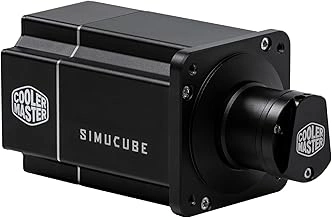
Cooler Master x Simucube 2 Pro Direct Drive Wheelbase – 25Nm High-Torque Force Feedback, Ultra-Precise Direct Drive, Pro Sim Racing Performance, Low Latency, PC Compatible
The Cooler Master x Simucube 2 Pro delivers 25Nm of torque - more than double the multipleNm threshold - and represents a different philosophy: open-platform configurability over plug-and-play convenience. This wheelbase uses the same motor and TrueDrive software ecosystem that professional sim racers trust, with support for both multiple and multiple steering wheel bolt patterns, meaning you can pair it with any compatible rim from any manufacturer without vendor lock-in.
At $1,449.99, the price reflects the hardware's capabilities and the ecosystem's flexibility. The 25Nm peak torque requires a very rigid aluminum or steel cockpit; desk mounts and entry-level rigs will flex under full force, wasting the fidelity this motor provides. You'll also need to budget for a separate steering wheel, as the base ships without one. The TrueDrive software is open-source and highly granular, offering per-game profiles and filter adjustments that let you tune force feedback response exactly to your preference - but this configurability comes with a learning curve that plug-and-play systems avoid.
The real tradeoff is upfront investment versus long-term cost. If you're certain about your commitment to sim racing and willing to build a cockpit that can handle the forces, the Simucube 2 Pro is the "buy once" option: no proprietary ecosystem limits your wheel choices, no firmware restrictions block third-party pedals, and no planned obsolescence forces future upgrades. For users still exploring whether they'll stay in the hobby, or those without a rigid cockpit, the higher cost and setup demands outweigh the flexibility. For committed racers who value control over convenience, this is the platform that grows with you indefinitely.
- ✅ 25Nm peak torque with ultra-precise direct drive motor
- ✅ Open platform: compatible with any 70mm or 50.8mm steering wheel
- ✅ TrueDrive software offers granular per-game tuning and open-source flexibility
- ✅ No vendor lock-in for wheels, pedals, or accessories
- ✅ Professional-grade hardware for long-term durability
- ⚠️ $1,449.99 price requires significant upfront investment
- ⚠️ 25Nm torque demands a very rigid aluminum or steel cockpit to prevent flex
- ⚠️ No included steering wheel - separate purchase required
- ⚠️ TrueDrive software learning curve steeper than plug-and-play systems
- ⚠️ Exceeds 12Nm constraint for users seeking entry-level torque
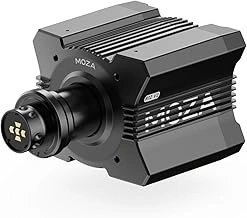
MOZA R12 V2 Direct Drive Sim Racing Wheelbase Servo Base
The MOZA R12 V2 Direct Drive Sim Racing Wheelbase Servo Base delivers 12Nm of torque in a compact motor design, positioning itself as the middle-ground choice for users stepping up from entry-level gear or belt-driven systems. Priced at $429.99 with a 4.5/5 rating, this wheelbase provides stronger force feedback and improved detail resolution compared to lower-torque options, while staying within the range that most mid-tier cockpits and desk mounts can handle without flex.
The R12 V2 integrates tightly with the MOZA ecosystem through its proprietary quick-release system, offering native compatibility with MOZA steering wheels and pedals. MOZA Pit House software provides unified configuration for all connected MOZA peripherals, streamlining the setup process and eliminating the need to juggle multiple driver packages. This ecosystem approach simplifies installation and tuning, but it does lock you into MOZA-branded wheels and pedals unless you invest in third-party adapters - a tradeoff worth considering if you plan to mix hardware brands later.
The 12Nm output gives you enough headroom to feel road texture, tire slip, and suspension detail across rally stages and circuit racing without overwhelming your arms during longer sessions. The additional torque over 9Nm and multipleNm wheelbases translates to clearer feedback when catching slides and more stability during high-speed straights, making it easier to read what the car is doing through your hands. If you value plug-and-play convenience and prefer a cohesive ecosystem over mixing components from multiple brands, the R12 V2 offers a cleaner path to a complete direct drive setup without the complexity of adapter compatibility research.
- ✅ 12Nm torque provides strong detail resolution and headroom for longer sessions
- ✅ Proprietary quick-release and MOZA Pit House software simplify setup and tuning
- ✅ Native compatibility with MOZA wheels and pedals for a cohesive ecosystem
- ✅ Compact motor design fits mid-tier cockpits and desk mounts without excessive flex
- ⚠️ Locked into MOZA ecosystem unless using third-party adapters
- ⚠️ Higher upfront cost at $429.99 compared to 9Nm and 10Nm options
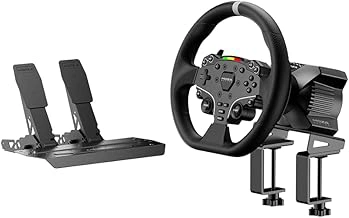
MOZA R3 Racing Simulator 4-Piece Wheel & Pedals Bundle
The MOZA R3 Racing Simulator 4-Piece Wheel & Pedals Bundle arrives at $279.99 as the lowest-cost complete entry into direct drive, pairing a compact wheelbase with a steering wheel and pedal set that work together out of the box. For upgraders coming from gear-driven systems who want to eliminate compatibility research and start driving immediately, this bundle removes the guesswork: every component is designed to communicate within MOZA's ecosystem, and the 4.7/5 rating reflects user satisfaction with that plug-and-play simplicity.
The wheelbase delivers direct drive torque likely under 5Nm - well below the multipleNm ceiling most first serious upgrades target - but still a meaningful step up in smoothness and detail from belt or gear mechanisms. Force feedback will feel more linear and responsive than entry-level systems, though you'll notice less resistance during high-load cornering and reduced texture resolution on kerbs or gravel. That lower torque ceiling also means less fatigue during long sessions, which can help newer direct drive users build confidence before chasing higher force levels.
The bundled wheel and pedals keep initial cost down but represent the most likely upgrade path within multiple. The wheel rim uses a fixed design rather than quick-release, limiting swaps to other rim styles, and the pedals lack load-cell brake technology found in mid-tier standalone sets. You're trading future flexibility for immediate usability: instead of budgeting separately for a wheelbase, rim, and pedals, you invest in a working system now and replace components incrementally as skill and budget allow.
This bundle makes sense for budget-conscious upgraders who value a complete, compatible package over maximum torque headroom, and who plan to grow their setup one piece at a time rather than buy top-tier components from the start.
- ✅ Complete wheel and pedal set included at $279.99
- ✅ All components designed to work together with no compatibility research
- ✅ Direct drive smoothness and response over gear-driven systems
- ✅ Lower torque reduces fatigue for newer direct drive users
- ⚠️ Torque likely under 5Nm, well below 12Nm target for serious upgrades
- ⚠️ Bundled wheel uses fixed design, limiting rim swap options
- ⚠️ Pedals lack load-cell technology found in higher-tier sets
- ⚠️ Bundle components may need replacement sooner than standalone wheelbase
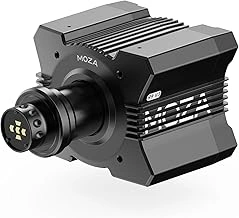
MOZA R9 V3 Direct Drive Sim Racing Wheel Base
The MOZA R9 V3 delivers 9Nm of direct drive torque for $329.99, making it the most accessible entry point in the MOZA ecosystem and one of the most popular first serious upgrades from gear-driven wheels. Rated 4.7 out of 5, this wheelbase offers the force feedback clarity and low-latency response that define direct drive systems, without the premium attached to higher-torque models.
At 9Nm, the R9 V3 provides enough headroom for rally stages, GT cars, and Formula racing without clipping or compression in most titles. You'll feel kerb detail, tire slip angle, and weight transfer with precision that gear-driven systems simply cannot reproduce. The tradeoff against the MOZA R12 is straightforward: the R9 V3 delivers slightly less torque headroom and fine detail resolution at the limits, but the difference matters most in high-downforce cars or extended endurance sessions where fatigue becomes a factor.
This is a wheelbase-only package. You must budget separately for a MOZA-compatible wheel rim and pedal set, which locks you into the MOZA ecosystem but also ensures plug-and-play compatibility and unified software control through MOZA Pit House. If you're building your rig component by component and prefer to invest in a quality wheelbase first, then add peripherals as budget allows, the R9 V3 is the cleanest path forward.
The R9 V3 suits users who want true direct drive force feedback without bundle compromises, accept ecosystem commitment in exchange for seamless integration, and plan to scale their setup over time. If 9Nm feels limiting for your driving style or preferred car classes, the R12 is the logical step up; if budget is the primary constraint and you're confident in the MOZA platform, the R9 V3 is the baseline that won't hold you back.
- ✅ Direct drive clarity and low-latency response at $329.99
- ✅ 9Nm torque headroom sufficient for most car classes and titles
- ✅ Full MOZA ecosystem compatibility with unified software control
- ✅ Wheelbase-only design allows component-by-component budget planning
- ⚠️ Wheelbase only - wheel rim and pedals sold separately
- ⚠️ Ecosystem lock-in limits peripheral upgrade flexibility
- ⚠️ Less torque headroom and detail resolution than R12 at higher force levels