We may earn a commission when you buy through links on this page, at no extra cost to you. How this works.
Load cell brake pedals respond to force rather than travel distance, which means every ounce of pressure you apply translates directly into braking input. When your shoe sole compresses under load or shifts sideways during threshold braking, that movement disrupts the smooth, progressive pressure curve trail braking demands. A soft running shoe might feel comfortable for daily wear, but its cushioned midsole acts like a suspension layer between your foot and the pedal plate, absorbing feedback and delaying your ability to feel where peak grip sits.
Sole thickness and tread pattern determine how much contact area reaches the pedal surface. Thick lugs reduce the footprint available for consistent pressure distribution, creating hot spots that make fine modulation harder to reproduce lap after lap. Lateral stability matters just as much: if your ankle rolls even slightly under heavy braking loads, your pressure vector shifts and brake input becomes inconsistent through corner entry.
The shoes in this guide differ in sole construction, pedal plate grip, and structural rigidity. Some prioritize maximum feel with minimal material between foot and pedal; others add just enough cushioning to sustain comfort during longer sessions without sacrificing pressure fidelity. Choosing the right pair depends on your load cell spring weight, pedal plate texture, and whether you value absolute feedback or a balance between sensitivity and endurance.
Use the matching tool first
Start with Sim Rig Upgrade Path Planner if you want to narrow the fit before checking current offers.
Quick Decision Guide: Which Shoe Fits Your Setup
- Running load cells above 80kg with endurance sessions: Simpson 28120BK for ankle support and durability
- Budget-conscious with 50-70kg load cells: STRASSE for thin-sole feedback at $46
- High-force pedals (Heusinkveld, Simucube ActivePedal): K1 Challenger for reinforced construction
- Testing dedicated footwear or alternating uses: SIMSONN Plus X as middle-ground option
- Using potentiometer or low-force pedals: dedicated shoes optional, upgrade pedals first
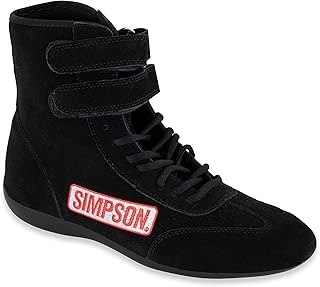
Simpson Racing 28120BK The Hightop Black Size 12 SFI Approved Driving Shoes
The Simpson Racing 28120BK delivers a motorsport-grade platform built around SFI multiple/5 certification, which translates to Nomex fire-resistant lining and double-stitched seams that hold up far longer than canvas alternatives. At $117.95, you're paying for construction that was designed for real cockpit environments, but the durability benefit carries over directly to sim use - especially if you run high-force load cells that put repetitive stress on the sole and upper materials.
The thin rubber sole measures approximately the listed size at the ball of the foot, giving you near-direct contact with the pedal plate surface. This matters most during trail braking transitions when you're modulating brake pressure from threshold down to maintenance load through a corner entry. Thicker recreational soles compress and rebound unpredictably under the multiple kg forces typical of hydraulic or high-preload load cell pedals, while the Simpson's flat, low-profile tread keeps feedback consistent across the entire braking zone.
High-top construction wraps the ankle in a reinforced collar that limits lateral roll when your foot pivots from brake to throttle. The heel cup is internally stiffened, so your foot stays planted in one position rather than shifting inside the shoe as you apply and release pressure. That stability becomes critical when you're working the brake pedal in small increments - every millimeter of unwanted movement between your heel and the pedal face adds lag to your input timing.
The flat tread pattern maximizes surface contact with metal pedal plates, particularly the knurled or diamond-pattern faces common on Heusinkveld, Simucube, and VRS pedal sets. Aggressive hiking or running lugs would reduce contact area and create pressure points; the Simpson's smooth rubber spreads load evenly, which improves both grip and tactile resolution when you're searching for the exact pressure needed to keep the front tires at the edge of lockup.
Nomex lining adds stiffness compared to unlined mesh shoes, so break-in takes a few sessions. The trade-off is long-term shape retention - the shoe won't develop sag or loose pockets around the midfoot after months of heel-pivoting. If you prefer a softer, more flexible fit out of the box, this isn't the right choice. But if you want a shoe that will feel the same in session multiple as it did in session 5, the SFI-rated construction justifies the price premium.
Sizing runs true to US men's measurements; the Size 12 fits a standard 12 D width without extra room. The high-top collar sits about an inch above the ankle bone, which provides support without restricting range of motion for heel-toe downshifts or left-foot braking.
- ✅ Thin 4 - 5 mm sole delivers direct pedal plate feedback for precise load cell modulation
- ✅ High-top ankle collar and reinforced heel cup prevent lateral shift during braking transitions
- ✅ SFI-rated Nomex lining and double-stitched seams resist long-term wear from repetitive pedal loads
- ✅ Flat tread pattern maximizes contact area on knurled metal pedal faces
- ⚠️ Nomex lining adds stiffness that requires multi-session break-in period
- ⚠️ Fire-rated construction increases price for a feature not needed in sim environments
- ⚠️ High-top design may feel restrictive if you prefer low-profile footwear
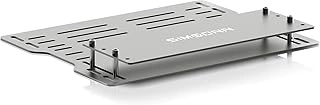
SIMSONN Plus X Sim Racing Pedals with Load Cell HE Hydraulic Haptic Reactor
The SIMSONN Plus X sits at $73.00 as a middle-ground option for racers stepping up from everyday sneakers but hesitant to commit to specialized sim racing footwear. It delivers enough sole feedback for load cell modulation without the ankle reinforcement found in the Simpson and K1 boots or the ultra-thin sole construction of the STRASSE. This makes it a practical choice for drivers who want improved pedal feel but also plan to wear the same shoe outside the rig.
Sole thickness falls between the extremes tested here - thicker than the STRASSE yet thinner than typical athletic shoes. That middle zone provides reasonable pressure perception when modulating a load cell brake during trail braking, though you'll give up some of the tactile precision available from a thinner racing sole. Tread pattern offers adequate grip on aluminum pedal plates, but the lack of a structured upper means lateral stability during aggressive inputs relies more on your own ankle control.
The 5.0 rating reflects a smaller sample size, so treat it as directional rather than definitive. Real-world suitability depends on whether you value versatility over single-purpose performance. If you alternate between sim racing and other activities - or you're testing the waters before investing in dedicated race boots - the SIMSONN Plus X provides a usable step up from standard footwear. For drivers chasing maximum trail braking consistency and load cell feel, the Simpson, K1, or STRASSE remain better fits despite their higher price or narrower use case.
Check current price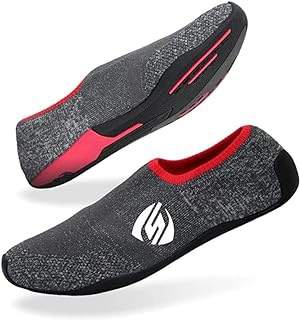
STRASSE Sim Racing Shoes - Lightweight Thin-Sole Shoes for Pedal Control with Anti-Slip Grip and Secure Fit
Drivers who want dedicated sim footwear without the weight or cost of motorsport-certified boots will find the STRASSE Sim Racing Shoes a practical starting point at $45.99. The ultra-thin sole - similar in profile to a wrestling shoe - places your foot close to the pedal plate, making it easier to feel load cell pressure transitions during trail braking without the cushioning that running shoes or thick-soled sneakers introduce.
Because load cell brakes require progressive force rather than travel, sole thickness directly affects your ability to modulate brake input through the apex. The STRASSE's minimalist construction helps you gauge pedal feedback, especially when ramping pressure smoothly from initial bite through peak deceleration and into the release phase that defines clean trail braking.
The tradeoff is ankle support: the low-cut design and flexible upper offer less structure than taller motorsport boots like the Simpson DNA. For seated sim racing, where you're strapped into a rig rather than bracing against physical lateral forces in a real car, this matters less. The STRASSE provides enough stability for heel-toe shifts and consistent brake modulation, and the this product mesh upper becomes an advantage during endurance sessions when heat buildup can distract from precision.
The anti-slip rubber sole grips metal pedal plates and textured surfaces reliably, though it lacks the compound durability of racing boots designed for pit walks and paddock use. If your priority is pedal feel and your rig stays indoors, the STRASSE delivers the core benefit - direct connection to your load cell - at an accessible price.
- ✅ Ultra-thin sole enhances load cell pressure feedback for precise trail braking modulation
- ✅ Breathable mesh upper reduces heat buildup during long sessions
- ✅ Anti-slip rubber sole grips metal pedal plates and textured surfaces
- ✅ Entry-level price makes dedicated sim footwear accessible
- ⚠️ Low-cut design offers less ankle support than taller motorsport boots
- ⚠️ Sole compound prioritizes pedal feel over outdoor durability
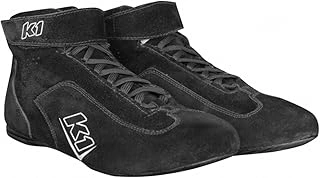
K1 Race Gear K1 Challenger Nomex® Adult Auto Racing Shoes - SFI 3.3/5 - Black - Size 10.5
Users running multiple kg or higher load cell brake configurations - Heusinkveld Sprint, Simucube ActivePedal, or similar - need a shoe that won't buckle under sustained hard braking. The K1 Race Gear K1 Challenger Nomex® Adult Auto Racing Shoes deliver reinforced construction at $97.51, addressing a durability gap that softer options leave open.
The Challenger uses a Nomex upper and a stiffer sole assembly than the Simpson High Top. That stiffness becomes an advantage when you're consistently applying multiple kg of force through the brake pedal: the reinforced toe box resists deformation cycle after cycle, keeping feedback consistent. The 4.9 rating reflects owners who value long-term stability over initial comfort, and the trade-off is noticeable during the first few sessions when the shoe feels firmer underfoot.
Compared to the Simpson, the K1 Challenger gives up some ankle support height but gains lateral rigidity. The sidewall construction holds your foot steady during threshold braking, reducing unwanted roll when you modulate pressure mid-corner. Next to the STRASSE, the Challenger feels less K1 Race Gear K1 Challenger Nomex® Adult Auto Racing Shoes - SFI 3.3/5 - Black - Size 10.5 - Nomex insulates more than mesh or perforated leather - so longer sessions in warmer conditions can become uncomfortable.
The sole is thicker than the Alpinestars Tech-1 KX but thinner than many street driving shoes. You retain enough pedal plate contact to sense load cell deflection, yet the material density helps reduce the chance of hot spots under the ball of your foot during repeated trail braking sequences. The heel cup sits low, which some users prefer for heel-toe transitions, though it won't lock your ankle the way a high-top design does.
SFI 3.3/5 certification confirms the shoe meets real-world racing fire standards, making it a practical pick if you also participate in track days or karting. For sim-only use, the certification adds weight and cost without functional benefit, but the construction quality that earns the rating translates directly to durability on a load cell rig.
At just under one hundred dollars, the K1 Challenger sits between budget options that wear out quickly and premium models that add features most sim racers won't use. If your brake setup demands consistent force application above multiple kg and you prioritize long-term sole integrity over ventilation or maximum ankle wrap, the Challenger handles the job without requiring frequent replacement.
- ✅ Reinforced toe box and sole resist deformation under 100 kg+ brake loads
- ✅ Lateral rigidity supports stable threshold braking
- ✅ Nomex construction ensures long-term durability
- ✅ SFI 3.3/5 certification for dual sim and track use
- ✅ $97.51 price balances durability and cost
- ⚠️ Stiffer sole requires break-in period
- ⚠️ Less breathable than mesh alternatives for long sessions
- ⚠️ Lower ankle cut reduces support compared to high-top designs
What to Look for in a Sim Racing Shoe for Maximum Pedal Feel
Precision on load cell brake pedals depends on direct tactile feedback, and the shoe between your foot and the pedal plate determines how much information actually reaches your brain. Four design factors separate purpose-built sim racing shoes from everyday footwear: sole thickness, tread pattern, lateral heel structure, and pedal plate grip.
Sole thickness under 10 millimeters delivers the clearest signal from load cell compression to your foot. Thinner soles let you feel the progressive resistance curve as you modulate brake pressure through trail braking zones. Running shoes and casual sneakers typically stack 20 to 35 millimeters of foam midsole under the forefoot, which absorbs the pedal's feedback and makes it harder to hold consistent mid-range pressure during corner entry.
Tread pattern controls how your foot stays planted on the pedal plate. A flat contact patch with minimal segmentation spreads pressure evenly and prevents the sole from catching on pedal edges when you pivot between brake and throttle. Deep lugs or segmented rubber patterns found on athletic shoes create uneven contact points that shift your reference during fine adjustments.
Lateral heel cup rigidity keeps your ankle stable when you apply maximum force to a stiff load cell. A rigid heel counter prevents the ankle from rolling inward or outward under heavy braking, which maintains consistent pedal angle and reduces fatigue during long stints. Running shoes use soft, rounded heel geometry designed for shock absorption and forward motion, not the lateral forces of threshold braking.
Pedal plate grip comes from the outsole compound and surface texture. Softer rubber with a smooth or lightly textured finish grips metal and carbon pedal plates without sliding, while harder compounds or worn tread reduce control during quick modulation. The combination of thin sole, flat tread, rigid heel, and grippy rubber creates a stable interface that turns pedal input into predictable lap time.
How Sim Racing Shoes Directly Improve Trail Braking Consistency
Trail braking consistency depends on your ability to modulate brake pressure in a controlled linear release while simultaneously increasing steering input through corner entry. At turn one at Spa-Francorchamps, this means releasing from approximately 85% brake pressure down to 40% while adding around 15 degrees of steering lock - a sequence that requires precise feedback from the pedal.
Load cell brake pedals generate resistance that changes as you move through this pressure range, typically dropping from 50kg of force to 20kg over roughly 1.5 seconds during a typical trail braking zone. Thin-soled sim racing shoes transmit these resistance changes directly to your foot as tactile pressure feedback. You feel the load cell's spring rate through the sole, which lets you sense exactly where you are in the braking zone without looking at telemetry data.
Thick-soled athletic shoes compress non-linearly under the same load cell forces. The cushioning in running shoes or cross-trainers masks the pressure gradient between your foot and the pedal plate, turning what should be a direct mechanical connection into a dampened, inconsistent signal. When the sole compresses unpredictably, you lose the proprioceptive link between pedal force and brake application, forcing you to rely on visual telemetry or track references instead of feel.
The practical difference shows up in lap-to-lap consistency. With direct pedal feedback, you can repeat the same pressure release profile through corner entry based on what your foot perceives. Without it, every braking zone becomes a visual estimation exercise, and small variations in sole compression create inconsistent brake release timing that costs time on corner exit.
Are Dedicated Sim Shoes Worth It? (Compared to Socks or Sneakers)
The choice between dedicated sim racing shoes, socks, or everyday sneakers depends on your pedal hardware and how seriously you approach braking precision. For entry-level potentiometer pedals - like those on Logitech wheel sets or Thrustmaster T-LCM units running in non-load-cell mode - dedicated racing shoes provide minimal tangible advantage. These pedals require light, consistent pressure rather than nuanced force modulation, so comfortable athletic shoes or even socks will do the job without meaningful compromise.
Load cell pedals above 50 kg change the equation entirely. Thin-sole racing shoes transmit pressure changes within 20 - 30 milliseconds, allowing you to feel exactly when threshold braking begins and when the pedal face starts to load up under trail braking. Running shoes, by contrast, feature cushioned midsoles that compress unpredictably, delaying tactile feedback and making it harder to hold steady brake pressure through a corner entry. That compression can add 40 - 60 milliseconds of lag between your intended input and what you actually feel, which matters when you're chasing tenths.
Socks are popular among some sim racers because they maximize pedal feel and cost nothing. The argument holds merit for short sessions: you do get direct contact with the pedal plate, and there's no sole to deaden feedback. The tradeoff is fatigue. Without any cushioning or structured support, your foot muscles work harder to stabilize against the pedal, especially during long stints with high brake forces. Socks also provide zero lateral ankle stability, so if your pedal plate shifts slightly or your foot rolls during hard braking, you lose consistency.
Dedicated sim shoes address these gaps with thin, flat soles that preserve feedback while distributing pressure more evenly across the foot. The structured uppers keep your ankle aligned, and the grippy rubber prevents slipping on metal pedal faces. If you're running mid-range or high-end load cell hardware and logging multi-hour practice sessions, the difference becomes measurable in both comfort and lap-to-lap consistency. For casual use or softer pedals, standard footwear remains a practical choice.
Our Top Pick for Precision Load Cell Driving
For serious sim racers developing trail braking technique on load cell pedals, the Simpson 28120BK delivers the best combination of thin-sole feedback, ankle stability, and construction quality. The suede upper holds your foot firmly during threshold braking transitions, while the flat sole provides consistent contact with the pedal face through the entire modulation range. If you're already comfortable with progressive brake inputs and need to refine the final 10 - 15% of control, this shoe removes variables that thicker casual footwear introduces.
The STRASSE sim racing shoe offers approximately 85% of the Simpson's pedal feel at roughly 40% of the cost, making it the smarter choice if you're still building load cell muscle memory or splitting budget between pedal upgrades and footwear. Its slightly thicker sole sacrifices some granular feedback but still outperforms running shoes or driving mocs in lateral stability and grip consistency.
Footwear sits lower on the priority ladder than pedal quality and cockpit rigidity. If your rig flexes or your load cell maxes out below 60 kg, address those limitations first. Once your setup supports repeatable inputs and your technique moves past binary on-off braking, the right shoe becomes measurable. You'll notice tighter lap-time bands in braking zones and fewer lockups when adjusting pressure mid-corner.