We may earn a commission when you buy through links on this page, at no extra cost to you. How this works.
Logitech G29 Driving Force Racing Wheel and Pedals
Software-controlled force feedback pedals promise dynamic ABS simulation and texture feedback. We break down whether the technology justifies the investment over proven hydraulic systems.
Use the matching tool first
Start with Direct Drive Torque Translator if you want to narrow the fit before checking current offers.
Traditional hydraulic pedals use fluid-filled cylinders to create resistance: you press harder, the oil compresses, and the pedal pushes back with a smooth, progressive force curve. That resistance is fixed at assembly or adjusted manually by swapping springs or changing fluid viscosity. The feel remains static throughout every braking event, lap after lap.
The Simucube ActivePedal replaces that passive hydraulic damper with a servo motor and real-time software control. Instead of relying on mechanical compression alone, the motor actively adjusts pedal resistance on the fly based on telemetry from your sim. When your virtual car's ABS pulses, the pedal physically pushes back against your foot in sync. Lock a wheel, and resistance drops momentarily to mimic tire breakaway. This is active force feedback: dynamic resistance that changes during a single brake application, not just between configuration sessions.
This comparison focuses on flagship-tier hardware for sim racers already running direct-drive wheelbases, load-cell pedals, and dedicated rigs. If you're considering either option, you've moved well past entry-level upgrades and are evaluating whether software-driven feedback justifies the additional cost and complexity over proven hydraulic systems. Both approaches deliver high pedal forces and precise input, but they differ fundamentally in how that force responds to what's happening on track.
Understanding this distinction matters because the performance gap isn't just about feel or immersion. Active feedback can alter braking consistency, muscle memory development, and the information you receive through your foot during threshold braking and trail braking zones.
How Traditional High-End Hydraulic Pedals Deliver Feedback
High-end hydraulic pedals use a straightforward mechanical architecture: a piston compresses fluid through a damper chamber, building progressive resistance that mimics the feel of a real brake master cylinder. Premium sets from manufacturers like Heusinkveld and Simtag pair this hydraulic damper with a load cell sensor that measures the force you apply, translating physical pressure into precise brake input without any perceptible lag.
The resistance curve - how much harder the pedal gets as you push deeper - is tuned mechanically. Stiffer springs increase initial bite, while damper adjustment changes how quickly the fluid flows, affecting rebound speed and mid-travel feel. Once dialed in, these settings remain stable across every session. There's no calibration drift, no software layer to introduce latency, and no reliance on firmware updates or active power beyond the load cell's USB connection.
This mechanical consistency delivers reliable muscle memory. Your brain learns exactly how much leg pressure corresponds to threshold braking, and that relationship stays constant whether you're running a two-hour endurance stint or hopping into the rig cold. The load cell captures force with resolution typically between 12 and 16 bits, giving you granular control over brake modulation even at the limit.
Hydraulic dampers also absorb pedal vibration naturally, smoothing out the feel without requiring electronic filters. The fluid's inherent resistance creates a progressive, linear response that many drivers find intuitive, especially those transitioning from real track experience. You get immediate physical feedback - the pedal pushes back against your foot in direct proportion to the force you apply, with no processing delay.
The tradeoff is inflexibility. Changing the pedal's character means physically swapping springs, adjusting preload, or re-routing damper flow - work that takes tools and time. You can't switch between a stiff GT3 feel and a softer road-car setup with a software profile. What you tune is what you get, every lap, until you pull out the toolkit again.
The Technology Behind Simucube ActivePedal: Software-Driven Motor Control
The ActivePedal replaces mechanical springs or fluid chambers with a high-torque servo motor that actively controls resistance throughout the pedal stroke. Instead of relying on fixed damping curves, the motor receives real-time telemetry from the simulator - ABS activation events, traction control intervention, wheel slip data, and surface characteristics - and adjusts force dynamically to replicate what a driver would feel through the brake pedal in a physical car.
The architecture operates through a three-stage dependency chain. First, the simulator publishes telemetry via its API (iRacing, Assetto Corsa Competizione, and similar titles expose this data stream). Second, Simucube's software layer interprets that telemetry and maps it to force profiles: a sudden drop in brake pressure during ABS pulsing, a vibration pattern when locking up on gravel, or a progressive stiffening as brake temperature climbs. Third, the servo motor responds, typically within 5 - 10 milliseconds, altering pedal resistance to mirror the event.
This approach means the pedal feel is never static. Where a hydraulic cylinder delivers consistent resistance based on fluid compression, the ActivePedal can simulate a soft initial bite that firms up mid-travel, then suddenly release pressure when ABS kicks in, then return to baseline as the system cycles. The motor can also introduce high-frequency vibrations - think of the pedal shudder during hard braking on a rumble strip - because it's not constrained by the mechanical damping inherent to hydraulic fluid or elastomer bushings.
The tradeoff is dependency. If the sim doesn't publish granular telemetry, or if the software layer can't parse a new title's data structure, the ActivePedal defaults to a preset resistance curve that behaves much like a conventional load cell. Latency is typically imperceptible during normal racing, but the system does require a stable USB connection and sufficient CPU overhead to process telemetry without dropping packets. Compatibility updates arrive through firmware releases, so support for newly launched simulators may lag by weeks or months after launch.
Direct Comparison: Simulating ABS, Lockup, and Surface Texture
Threshold braking without ABS separates the two technologies most clearly. Hydraulic pedals deliver a consistent, repeatable load curve that makes it easier to memorize and hit the same pressure point lap after lap. The mechanical feedback is predictable, which helps build muscle memory for trail braking and modulation. ActivePedal can replicate that static curve, but it also allows you to adjust stiffness, preload, and breakout force on the fly, which some drivers find distracting until they settle on one profile and leave it alone.
ABS activation is where ActivePedal's software-controlled force feedback shows its clearest advantage. The pedal can pulse against your foot to simulate the hydraulic chatter of an ABS pump, and it can reduce resistance momentarily to mimic pressure release during a lockup event. Hydraulic systems remain inert during ABS events - you feel nothing beyond the static load you create yourself. For drivers who rely on tactile cues to manage threshold braking in cars with ABS, that added layer of information can improve confidence and lap times. If you race older cars or prefer visual and auditory ABS cues, the hydraulic pedal's silence may be less of a limitation.
Road surface changes and lock-up chatter highlight a similar split. ActivePedal can transmit jolts when the wheel locks or when the car hits a curb, feeding telemetry data back through the pedal face. Hydraulic pedals stay smooth and consistent regardless of what happens on screen, which some drivers prefer because it removes variables and keeps the brake feel purely mechanical. The trade-off comes down to whether you want additional real-time feedback or a stable reference point that doesn't change with track conditions. Both approaches work, but they reward different driving styles and sensory preferences.
Performance Analysis: Measurable Lap Time and Consistency Impact
Active force feedback does not automatically make you faster. Elite sim racers already extract consistent lap times from high-quality hydraulic pedals by relying on visual cues, steering feel, and sound - skills developed over thousands of laps. The ActivePedal adds a tactile information channel, but it does not replace the need for smooth inputs and disciplined brake modulation.
Drivers switching from hydraulic to active systems face a learning curve. The pedal behavior changes dynamically with ABS engagement, tire lock, and surface conditions, which can feel unpredictable until muscle memory adapts. During the first few sessions, lap times may drop as you recalibrate braking points and pressure thresholds. Consistency typically improves after 10 - 15 hours of seat time, once you learn to trust the feedback rather than override it.
The measurable benefit appears in reduced lock-up frequency and smoother threshold braking, especially on cars with complex ABS maps or low-grip surfaces. You gain earlier awareness of tire saturation, which can shave tenths in corner entry phases where precision matters. However, seasoned drivers on static hydraulic pedals achieve similar results through practiced repetition and mental modeling of grip limits.
The ActivePedal's value proposition centers on immersion and sensory richness rather than outright speed. It replicates the road-surface feedback and pedal vibration real drivers use to manage grip, making the experience more intuitive and engaging. If your goal is competitive advantage in online racing, the time and budget investment may not yield proportional lap-time gains. If your priority is closing the sensory gap between sim and reality, active feedback delivers a layer of realism that static hydraulics cannot match.
Cost Analysis: Justifying the Multi-Thousand Dollar Investment
High-end hydraulic pedal sets from Heusinkveld, Simtag, and VRS sit in the $1,400 to $1,600 range for complete three-pedal systems. The Heusinkveld Ultimate+ delivers load-cell precision and damper adjustability at approximately $1,400, while Simtag's hydraulic brake reaches similar territory around $1,600 for a full set. The Simucube ActivePedal brake pedal alone commands $1,800 to $2,000, and the matching throttle pushes total investment well beyond $2,500 before mounting hardware.
That premium buys software-driven force feedback and telemetry integration, not faster lap times. The ActivePedal's ability to simulate ABS vibration, road texture, and dynamic brake fade translates to enhanced immersion rather than measurable performance gains. Lap time deltas between high-end hydraulic pedals and the ActivePedal system remain negligible in competitive settings, because brake consistency and muscle memory depend more on the driver than the feedback mechanism once a certain quality threshold is met.
Diminishing returns accelerate sharply past the $1,500 mark for pedal hardware. Upgrading from a $300 load-cell set to a $1,400 hydraulic system produces noticeable improvements in feel and adjustability. Moving from $1,400 hydraulics to a $2,500 ActivePedal setup delivers a fundamentally different experience through software control, but the cost-per-improvement ratio skews heavily toward subjective immersion rather than objective speed.
Justifying the ActivePedal investment hinges on whether dynamic telemetry feedback and endless software adjustability matter more than raw hydraulic consistency. Racers chasing tenths of a second in competitive leagues will find limited return; enthusiasts building immersive rigs for endurance racing or varied car classes gain a feature set unavailable in any hydraulic design. If your budget allows doubling pedal expenditure for software-driven realism and you value experimentation over static feel, the ActivePedal makes sense. If mechanical reliability and proven hydraulic performance meet your needs at half the price, flagship hydraulic sets remain the rational choice.
Final Verdict: Who Should Buy the Simucube ActivePedal
The Simucube ActivePedal makes sense for a narrow but passionate group: drivers who place immersion above all else and have the budget to support it. If you've already invested in high-end hydraulic pedals and want another layer of sensory feedback - dynamic ABS pulses, lockup simulation, per-car brake feel - the ActivePedal delivers something no static system can. It rewards users running telemetry-rich sims on PC, where software integration unlocks the full range of programmable force curves and real-time adjustments. For these drivers, the ActivePedal is the logical next step once mechanical performance has been maximized.
Standard hydraulic pedals remain the rational choice for most serious sim racers. They offer excellent pedal feel, repeatable performance, and compatibility across every platform and title without requiring software configuration or firmware updates. Hydraulic systems provide maximum value per dollar, especially for users who split time between older sims, console racing, or any environment where the ActivePedal's software-driven features cannot function. Mechanical simplicity means zero dependency on drivers, APIs, or game support - press the pedal, and it works.
There is no universal winner in the Simucube ActivePedal vs hydraulic pedals debate. The ActivePedal is a luxury tool for immersion seekers with disposable income and a stable PC sim racing workflow. Hydraulic pedals are the performance-first, broadly compatible, cost-effective option for everyone else. Your priorities - immersion versus value, software integration versus mechanical reliability - will determine which path fits your rig.
Ecosystem, Compatibility, and Setup Requirements
- PC-based simulation required; no console compatibility for ActivePedal FFB features
- Simucube software suite must run concurrently with sim title; adds system overhead
- Game must support detailed telemetry output (iRacing, Assetto Corsa Competizione, rFactor 2 verified)
- USB bandwidth and latency considerations when running multiple high-refresh peripherals
- Hydraulic pedals are plug-and-play with any load cell-compatible USB interface; no software layer required
- Rig rigidity requirements identical for both systems due to high braking forces
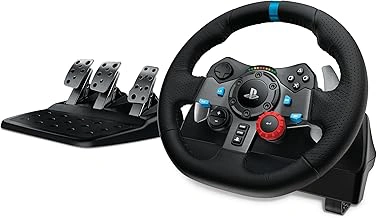
Logitech G29 Driving Force Racing Wheel and Pedals
The Logitech G29 Driving Force Racing Wheel and Pedals represents the entry point for most sim racers before they consider load-cell or software-controlled pedal systems. The G29 uses potentiometer-based sensors in all three pedals - accelerator, brake, and clutch - which measure position rather than pressure. This means resistance remains linear throughout the travel, and the brake pedal compresses easily without the progressive feel of hydraulic systems or the dynamic feedback of active force solutions.
Travel distance is limited, especially on the brake, which reaches full input after approximately two inches of movement. Muscle memory built on this pedal set often translates poorly when transitioning to pressure-sensitive systems like load cells, where brake input depends on force rather than distance. The lack of adjustable resistance or feel makes it difficult to simulate realistic braking thresholds, and there is no mechanism to replicate ABS engagement or tire lock-up through the pedal itself.
While the G29 remains a capable wheel-and-pedal bundle at $229.99, its pedal set underscores why serious sim racers eventually seek upgrades. The gap between potentiometer pedals and modern load-cell or hydraulic systems is substantial - and the leap to software-controlled force feedback like the ActivePedal is even wider. Understanding this baseline makes it easier to appreciate the technical and sensory advantages that come with higher-end hardware, even if the G29 itself serves many casual racers well for years.
Check current G29 pricing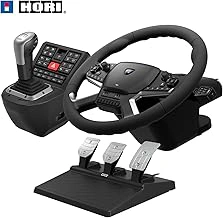
HORI Truck Control System with Force Feedback Steering Wheel, Shifter, and Pedals
Force feedback in sim racing typically refers to the resistance and road feel transmitted through the steering wheel - vibrations from curbs, weight transfer in corners, and loss of traction. The HORI Truck Control System demonstrates this standard implementation: the wheel provides force feedback to simulate vehicle dynamics, while the included pedals remain static. Priced at $550.06 with a 4.4/5 rating, this bundled system illustrates how conventional sim racing setups separate wheel FFB from pedal design.
The distinction matters when evaluating the ActivePedal. Every mid-range and high-end sim racing wheel uses force feedback motors to communicate steering forces, making wheel FFB an expected feature rather than an innovation. Pedal force feedback - real-time adjustment of brake resistance based on ABS engagement, tire lock, or surface conditions - remains rare. The HORI system's pedals use fixed springs or elastomers, delivering consistent resistance regardless of what's happening in the simulation.
This traditional approach works reliably for most sim racers. The pedals provide predictable muscle memory training, the wheel handles all dynamic feedback, and the complete package costs roughly one-third of the ActivePedal alone. Understanding this separation clarifies why the ActivePedal represents a distinct technology category: it brings software-controlled resistance adjustment to the brake pedal itself, not just the wheel you're already accustomed to feeling feedback through.
If you're weighing whether pedal-specific force feedback justifies the investment, recognizing that standard systems already deliver comprehensive wheel FFB helps frame the question correctly. The ActivePedal doesn't replace wheel feedback - it adds a second feedback layer at the pedals, where traditional setups like the HORI system provide only static resistance.
- ✅ Complete system with wheel FFB, shifter, and pedals at $550.06
- ✅ Demonstrates standard force feedback implementation in the wheel
- ✅ Pedals provide consistent, predictable resistance for muscle memory
- ⚠️ Pedals lack dynamic resistance adjustment during braking events
- ⚠️ No ABS simulation or tire-lock feedback at the pedal