We may earn a commission when you buy through links on this page, at no extra cost to you. How this works.
Classic car simulation demands tactile precision that goes beyond visual immersion - the shifter you grip and move through gears becomes the mechanical bridge between muscle memory and digital fidelity. Machined aluminum construction and well-defined mechanical gating separate high-fidelity H-pattern shifters from gaming accessories that merely approximate the motion. When you downshift into a tight hairpin or row through gears in a vintage touring car, the resistance profile, gate clarity, and structural rigidity directly shape whether the experience feels like interacting with a mechanical linkage or a flexible toy.
Material choice dictates longevity and feedback consistency. Aluminum housings resist flex under load, maintain gate alignment through thousands of shifts, and dissipate heat from friction components without warping. Plastic shells, even reinforced composites, introduce compliance that blurs gate this product and allows mounting points to shift during aggressive inputs. Mechanical gating - spring-loaded detents, ball-bearing indexing, or cam-profile resistance - creates the push-pull dialogue your hand expects from a classic transmission. Peripherals that rely on optical sensors alone or ambiguous internal stops cannot replicate the tactile grammar of synchromesh engagement or the notchy precision of a dog-leg first gear.
High-fidelity shifters also address mounting geometry as a functional requirement, not an afterthought. Cockpit rigidity and lever throw angle influence whether you feel the gate structure or the flex in your rig. Shifters with thin stamped-steel brackets or single-point clamps introduce play that compounds with every shift, masking the very feedback the mechanism was designed to deliver. Serious classic car simulation excludes plastic housings, vague or adjustable-only-by-firmware gate definitions, and any mount system that allows the shifter to twist or rock under lateral load.
Understanding these exclusion criteria focuses your search on peripherals engineered for mechanical fidelity rather than feature lists. The difference shows immediately when you row through third-to-second on a simulated Alfa Romeo: a machined unit with tuned detents and a rigid mount delivers crisp, repeatable feedback, while a flexing plastic shifter offers only approximate travel and mushy confirmation.
Key Features to Evaluate Before Purchase
- Machined aluminum shifter body and gate plate (not plastic or die-cast alloy)
- Adjustable gate resistance via spring preload or damper settings
- Configurable throw length and shift pattern geometry
- Rigid mounting interface compatible with 40mm, 45mm, or 80/20 aluminum extrusion profiles
- Direct USB connection or proven compatibility with your existing wheel base ecosystem
- User-replaceable bushings and detent springs for long-term serviceability
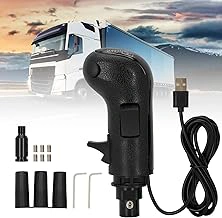
Besilo USB Truck Simulator Shifter for PC, Compatible with Logitech G25/G27/G29/G923, Thrustmaster TH8A – 18-Speed Gear Shift Lever for ATS & ETS2 – Semi Truck Shifter for Sim Racing Games
The Besilo USB Truck Simulator Shifter offers an accessible entry point for drivers focused on American Truck Simulator and Euro Truck Simulator 2, with broad compatibility across Logitech G25, G27, G29, G923, and Thrustmaster TH8A ecosystems via USB connection. At $39.99, its 18-speed truck configuration and plastic construction place it squarely in the budget category, making it functional for long-haul simulation where gate precision and material rigidity are less critical than pattern availability.
Compatibility is straightforward: the USB interface removes the need for wheel-base integration, so the shifter operates independently and can pair with most sim racing setups without proprietary adapters. The 18-speed layout replicates the splitter and range-selector logic common in semi-truck transmissions, giving truck sim enthusiasts a closer match to real-world cab controls than a standard six-speed H-pattern provides.
Material and build quality reflect the price. Plastic housings and linkages keep weight and cost low, but they also limit the mechanical feedback and gate resistance that define high-fidelity shifters. There is no published adjustability for gate resistance, spring tension, or throw length, so drivers accustomed to tuning shift feel for vintage sports cars or heavy classics will find the Besilo's feedback fixed and light. The mounting base is designed for desk clamp or bolt-through attachment, though stability under aggressive shifting depends on secure anchoring and the rigidity of the mounting surface.
For classic car simulation fidelity - where machined aluminum construction, adjustable gating, and precise six-speed patterns recreate the mechanical character of period-correct transmissions - the Besilo falls short. Its truck-focused geometry and lack of fine-tuning features mean it cannot deliver the short-throw precision or tactile resistance that vintage Porsche, Alfa Romeo, or Lotus shifters demand. Drivers prioritizing material authenticity, adjustable throw, and premium build quality will need to step up to machined aluminum units with programmable gate resistance.
The Besilo USB Truck Simulator Shifter serves truck sim enthusiasts on a tight budget well, offering plug-and-play compatibility and the 18-speed pattern those titles require. For classic car drivers seeking machined components, adjustable feedback, and short-throw accuracy, this unit is not the right tool - its plastic construction and fixed configuration cannot replicate the mechanical character of high-fidelity H-pattern shifters designed for sports and vintage simulation.
- ✅ USB connection works independently across Logitech and Thrustmaster ecosystems without proprietary adapters
- ✅ 18-speed truck configuration matches ATS and ETS2 transmission layouts
- ✅ $39.99 price point accessible for budget-conscious truck sim drivers
- ✅ Desk clamp and bolt-through mounting options included
- ⚠️ Plastic construction lacks the rigidity and feedback of machined aluminum units
- ⚠️ No adjustable gate resistance, spring tension, or throw length
- ⚠️ Truck-focused geometry and light feedback unsuitable for classic car simulation fidelity
- ⚠️ Fixed configuration cannot replicate short-throw precision or period-correct shift feel
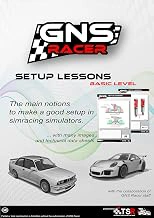
Setup lessons: To perform a good setup in simracing simulators.
Software configuration and cockpit ergonomics influence how well any shifter performs in practice. This free setup guide covers general sim racing configuration principles - from field-of-view adjustment and force-feedback tuning to seating position and pedal angles - that apply across most titles and hardware combinations.
The resource is useful for dialing in simulator settings and arranging your rig for comfort, but it does not walk through hardware selection criteria or the mechanical principles that separate machined aluminum gates from stamped-steel alternatives. If you already own an H-pattern shifter and need to optimize software profiles or correct mounting height, the guide offers a starting point for those ergonomic and configuration tasks.
Expect general advice on visual calibration, control-input curves, and seat-to-wheel geometry rather than technical comparisons of gate resistance, throw length, or bearing type. Pair this configuration knowledge with the hardware evaluation steps outlined earlier in this article to ensure both your physical shifter and your simulator setup work together correctly.
View setup resource
SIMRACING – The Definitive Guide
Before investing in specialized hardware like a high-fidelity H-pattern shifter, many sim racers benefit from understanding the broader ecosystem of wheels, pedals, software platforms, and driving techniques that shape the hobby. SIMRACING - The Definitive Guide offers a comprehensive reference covering hardware selection, software setup, and foundational driving skills across the sim racing landscape.
This guide walks through the categories of sim racing equipment - from entry-level controllers to direct-drive wheelbases - and explains how different components work together to create an immersive driving environment. It addresses platform compatibility, force feedback tuning, and the relationship between hardware fidelity and driver input precision. For readers planning a shifter upgrade, the context around mounting systems, rig geometry, and input device hierarchy helps clarify where an H-pattern fits into a complete setup.
The book also covers software platforms, career progression systems, and technique fundamentals such as heel-toe downshifting and rev-matching - skills that become relevant once you add manual transmission simulation to your rig. While it does not focus exclusively on shifter construction or gate mechanisms, it provides the surrounding knowledge needed to make informed decisions about which peripherals to prioritize and how to integrate them effectively.
At $39.99 with a 4.6/5 rating, this reference serves readers who want a single resource to navigate the sim racing hardware and software market before committing to specific components. It is particularly useful for those building their first dedicated rig or transitioning from paddle shifters to manual transmission simulation, offering clarity on how each piece of the puzzle contributes to driving feel and lap-time consistency.
- ✅ Covers the full sim racing ecosystem - hardware, software, and technique - in one reference
- ✅ Explains how components like shifters integrate into overall rig design and input hierarchy
- ✅ Addresses platform compatibility and force feedback tuning across multiple setups
- ✅ Provides foundational knowledge for heel-toe and rev-matching skills used with H-pattern shifters
- ⚠️ Does not focus exclusively on shifter construction, materials, or gate adjustment mechanisms
- ⚠️ Broad scope means less depth on any single component category
- ⚠️ Print format may not reflect the latest hardware releases or firmware updates
What Defines a High-Fidelity H-Pattern Shifter: Mechanical Principles
High-fidelity H-pattern shifters replicate the mechanical behavior of classic manual transmissions through three interlocking systems: spring-loaded detent resistance that pulls the lever back to the neutral gate, adjustable throw geometry that controls the distance and angle between gear positions, and rigid metal linkage that eliminates flex during fast or forceful shifts. Together, these elements create the tactile signature drivers expect when moving from third to fourth in a vintage sports car or slotting into reverse with deliberate effort.
Spring-loaded detents use compression or torsion springs paired with ball bearings or pins that index into machined pockets at each gear position. Adjustable resistance lets you dial in the force required to overcome the detent - light for a synchromesh gearbox feel, heavy for an older dog-leg or truck pattern. Without this indexed resistance, the lever floats between gates and you lose the physical confirmation that the gear has engaged.
Gate width and throw length determine how far the lever travels horizontally and vertically. Adjustable gates let you match the spacing of a specific car: a tight Italian sports-car pattern with short throws, or a wide American muscle-car layout with long, deliberate movements. Precision-machined aluminum gates maintain consistent spacing under load, while plastic or stamped-steel gates can warp or wear unevenly after repeated use.
Rigid linkage - typically a solid shaft or ball joint connecting the lever to the sensor or game controller circuit - prevents slop and false neutrals. Metal-on-metal contact points, often using steel pins in aluminum housings, ensure that each shift registers cleanly without the micro-movements or backlash common in designs that rely on plastic bushings or flexible couplings. This rigidity matters when you need to feel the difference between a slight deflection and a completed shift, especially during heel-toe downshifts or quick sequential changes.
Precision machining ties these components together. CNC-milled aluminum parts hold tighter tolerances than cast or injection-molded alternatives, so the lever returns to the same neutral position every time and each gate boundary feels identical. That repeatability is what separates a high-fidelity shifter from a basic peripheral - you build muscle memory around consistent mechanical feedback rather than compensating for variation in every shift.
Material Deep Dive: Why Machined Aluminum Is the Gold Standard
Machined aluminum components deliver dimensional precision that directly affects shift quality. When a shifter gate is CNC-milled from billet aluminum, the tolerances remain tight - typically within 0.1 mm - so the selector rod tracks through each gear position without slop or misalignment. Injection-molded plastic housings flex under the repetitive side loads of fast H-pattern shifts, which introduces play at the pivot points and softens the mechanical feedback you rely on to confirm neutral or second gear by feel alone.
Thermal stability matters more than many builders expect. Aluminum's coefficient of expansion is lower and more predictable than that of filled nylon or ABS, so gate spacing and detent engagement stay consistent whether your rig sits in a climate-controlled room or a garage that swings twenty degrees between sessions. Die-cast zinc alloys - common in mid-tier gaming shifters - offer better rigidity than plastic but often carry internal porosity from the casting process, which can lead to hairline cracks around fastener bosses after hundreds of hours of use.
Surface finish plays a quiet but important role in friction management. Anodized or hard-coat aluminum provides a smooth, low-friction plane for selector forks and gate plates to slide against, reducing the gritty drag that builds up on rougher plastic surfaces as dust and wear particles accumulate. The anodized layer also resists corrosion from perspiration and cleaning solvents, keeping detent balls and spring-loaded mechanisms moving freely over the long term.
Durability under load separates recreational-grade hardware from components built to survive competitive practice schedules. A machined aluminum shifter housing can handle the sustained lateral forces of clutch-kick downshifts and high-frequency sequential blips without cracking mounting ears or distorting gate geometry. Plastic housings may survive gentle road-car simulation, but they show stress whitening and creep deformation under the kind of abuse that rally and touring-car drivers inflict during endurance events.
The trade-off is cost and weight. Machined aluminum shifters typically start above the price point of plastic alternatives, and the added mass - often two to three times heavier - requires a stiffer mounting solution to prevent flex in the rig frame itself. For builders prioritizing mechanical fidelity and long-term consistency, that trade-off delivers measurable returns in shift precision and component lifespan.
Understanding Ecosystem Compatibility: USB, Wheelbase Integration, and Button Mapping
Connection architecture determines whether your H-pattern shifter will work with your wheelbase, your games, and your control-mapping software. Most high-fidelity shifters offer one of two paths: standalone USB mode, where the shifter appears as an independent HID game controller, or wheelbase pass-through, where the shifter connects to your wheel's base and inherits that ecosystem's device profile.
Standalone USB is the most flexible approach. The shifter plugs directly into a PC USB port, registers as its own controller, and sends gear position and button data independently. This works with any sim title that supports multiple input devices - iRacing, Assetto Corsa Competizione, Automobilista 2, rFactor 2, and Dirt Rally 2.0 all recognize USB shifters without additional drivers. You map gears and buttons inside each game's control settings or through SimHub, which can consolidate multiple USB devices into unified profiles. USB mode also makes it easy to add a sequential plate or button box later without running out of input channels on your wheelbase.
Wheelbase pass-through is common in console-compatible ecosystems. Fanatec shifters use an RJ12 cable to connect to the wheelbase's accessory port; the wheelbase then exposes all inputs - wheel buttons, pedals, shifter - as a single device to the PlayStation or Xbox. Thrustmaster TH8A and Logitech shifters follow a similar pattern. This simplifies console setup, but on PC it can limit flexibility: if your wheelbase firmware doesn't expose enough button IDs or if you want to run the shifter on a secondary rig without the wheel, pass-through becomes a constraint.
Some shifters offer both modes via a switch or firmware toggle. Check whether your chosen model supports dual-mode operation if you plan to move the shifter between rigs or upgrade your wheelbase in the future. For purely PC-based classic car simulation, USB mode provides the widest compatibility and the easiest path to advanced button mapping in tools like SimHub, JoystickGremlin, or the native game UI.
Button mapping matters more than many builders expect. High-fidelity shifters often include two to six auxiliary buttons on the housing for handbrake, ignition, or pit-limiter assignment. In USB mode, these appear as standard joystick buttons you can bind in any sim. In wheelbase pass-through, button availability depends on how many IDs the wheelbase firmware reserves. Review the pin-out or manual for your wheelbase before assuming every shifter button will be accessible in pass-through mode.
Mounting Solutions: Eliminating Flex and Optimizing Ergonomics
Solid mounting eliminates the flex that destroys the tactile feedback an H-pattern shifter is meant to deliver. A shifter secured to a wobbling base or flexing bracket disconnects the engagement you feel from the action happening on screen, especially during the rapid downshifts and heel-toe sequences common in classic car simulation.
Start with the mounting interface. Most aluminum H-pattern shifters use a flat base plate drilled for M6 or M8 bolts. Check the hole spacing and diameter against your rig's profile system. T-slot aluminum extrusion - commonly sold as 40×40 mm or 80/20 (1.5″ or 3″) - accepts drop-in T-nuts that slide into the channel and lock under load. M8 bolts and flanged T-nuts offer more clamping force and resist loosening better than M6 hardware, particularly when the shifter sits on a cantilevered bracket. Some rigs use flat steel plates or wooden bases; in those cases, through-bolts with large washers and lock nuts distribute force and prevent pull-through.
Metal-to-metal contact matters. If your shifter base sits directly on aluminum extrusion or a steel plate, the connection stays rigid under load. Adding rubber pads or thick washers between the shifter and the frame introduces compliance that softens the feel of each gate and allows micro-movement during shifts. If vibration damping is necessary, use thin rubber isolation only at fastener contact points, not across the entire base.
Shifter height and lateral position shape ergonomics in ways that matter more in classic car seating positions. Sports cars from the 1960s and 1970s often placed the shifter lower and closer to the driver's hip than modern GT layouts. If your rig places the shifter too high or too far forward, your wrist angle during third-to-fourth shifts becomes uncomfortable, and heel-toe downshifts require awkward leg geometry. Adjustable brackets or drop-plates - typically 50 mm to 100 mm - let you lower the shifter and move it laterally without cutting or welding. Test the position by sitting in your normal driving posture: your hand should rest naturally on the knob in third or fourth gear, and your elbow should stay slightly bent through the full shift arc.
Flex usually comes from three sources: under-torqued fasteners, long unsupported brackets, and shifter bases with insufficient thickness. Tighten all bolts to the torque specification in the shifter's manual, typically 8 to 12 Nm for M8 hardware. If you mount the shifter on a bracket that extends more than 150 mm from the nearest support, add a diagonal brace or gusset to resist torsional twist. Shifter bases thinner than 4 mm can bend under side-load; if your shifter exhibits this, sandwich the base between two aluminum or steel plates and through-bolt the assembly. Each of these fixes eliminates a compliance path and keeps the force you apply on the knob tied directly to the sensor inside the shifter.
Evaluating Budget Shifters: When Cost Savings Compromise Fidelity
Budget USB shifters - often priced under $100 - fill a gap for drivers entering sim racing, but they introduce compromises that directly affect fidelity in classic car simulation. Plastic gate plates flex during aggressive shifts, blurring the mechanical precision that defines vintage gearboxes. Non-adjustable resistance springs lock you into a single throw weight, eliminating the ability to match the stiff, notchy feel of a 1960s muscle car or the lighter action of a European touring car. Flex in the mounting interface compounds the problem. Stamped-steel brackets and thin-wall plastic housings amplify vibration and allow the entire assembly to move under load, breaking immersion when you're heel-and-toeing through a downshift sequence. Serviceability suffers as well: budget units typically use sealed bearing cartridges and proprietary springs, so wear means replacement rather than rebuild. These compromises matter most when you're driving classic cars that demand frequent, deliberate shifts - think historic rallying or touring-car races where you'll execute dozens of gear changes per lap. In those contexts, gate slop and inconsistent resistance disrupt timing and make it harder to develop muscle memory. For occasional use in modern GT cars with sequential modes or longer gears, a budget shifter may prove acceptable, especially if your primary focus lies elsewhere in the rig. The decision hinges on how central the shifter is to your simulation experience. If classic manual gearboxes form the core of your driving, budget units will feel like a temporary . If you rotate between disciplines and only occasionally drive vintage machinery, the cost savings may justify the tradeoff until you're ready to invest in machined components and adjustable geometry.
Making the Right Choice for Your Budget and Driving Style
Choosing the right H-pattern shifter starts with defining your priority: authentic tactile feedback or basic functionality. If you're building a setup for classic car simulation where mechanical fidelity matters - heel-toe downshifts in a vintage GT40, double-clutching a touring car through Goodwood - machined aluminum construction and adjustable gate resistance become essential. These features deliver the weight, throw precision, and adjustable notch resistance that replicate period-correct shifter behavior. Without them, you'll have gear selection, but the feel will fall short of what defines high-fidelity driving simulation.
Entry-level USB shifters exist, and they work. They register gear changes reliably and cost significantly less. But they rely on plastic internals, fixed resistance, and lightweight housings that lack the inertia and mechanical feedback of aluminum units. For casual racing or modern sequential drills, that tradeoff may be acceptable. For someone chasing authentic classic car immersion, it won't satisfy long.
Before you commit, verify three details in the product listing. First, confirm the body and internal components are machined aluminum, not die-cast alloy or composite. Second, check that gate resistance and throw distance are user-adjustable - fixed settings limit your ability to match different car eras or personal preference. Third, review the mounting system: direct rig compatibility, adapter requirements, and whether the unit ships with necessary hardware. A shifter that doesn't mount securely or requires fabrication adds cost and complexity you may not expect.
Long-term serviceability matters more than many builders anticipate. Look for designs with replaceable bushings, accessible adjustment points, and manufacturers that stock spare parts. A well-built aluminum shifter should outlast multiple rig upgrades, but only if wear components can be serviced without replacing the entire unit. Budget for the shifter that meets your fidelity standard and mounts cleanly to your rig the first time - buying twice costs more than buying right.