We may earn a commission when you buy through links on this page, at no extra cost to you. How this works.
Direct drive wheels generate constant force feedback that can exceed 20 Nm during aggressive corner entry, and that sustained torque creates friction heat and pressure points across your palms that bare hands simply cannot manage for long sessions. The steering rim becomes a rotating surface under load, and without proper grip material between your skin and the wheel, you'll experience slippage during sudden force spikes, blisters from repetitive friction, and hand fatigue that shortens your focus window well before the race ends.
Generic work gloves or cycling gloves lack the specific palm reinforcement needed for rotational grip under high torque. Most use foam padding designed for impact absorption rather than friction management, and their seams often sit exactly where your hands anchor during hard cornering. When FFB kicks back through a curb strike or snap oversteer, those seams dig in, the padding compresses unevenly, and your grip breaks at the worst possible moment.
Effective sim racing gloves solve this with continuous palm coatings - silicone, rubberized synthetic leather, or textured polyurethane - that maintain surface contact across the entire gripping zone without bunching or slipping. Breathability matters because trapped heat softens your grip and accelerates moisture buildup, which reduces friction coefficient and forces you to over-grip to compensate. Durability under rotational friction is the real test: cheap coatings peel or wear smooth within weeks of regular use, while quality materials maintain their texture through hundreds of hours.
Tactile feedback retention separates adequate gloves from precision tools. You need to feel the wheel's surface texture, button edges, and rotary encoder clicks without a numb barrier between your hands and the controls. Thin, high-friction materials preserve that input while still protecting against heat and pressure, letting you modulate force and detect the wheel's behavior through your palms rather than just visual cues.
Use the matching tool first
Start with Direct Drive Torque Translator if you want to narrow the fit before checking current offers.
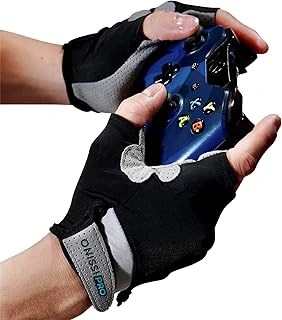
ONISSI Pro Gaming Gloves for Sweaty Hands
If sweaty palms compromise your grip during extended racing sessions, the ONISSI Pro Gaming Gloves offer a straightforward solution at $24.99. The textured palm material is designed to maintain contact with the wheel rim even when your hands start producing moisture under the strain of direct drive force feedback.
The palm texture strikes a practical balance for high-torque wheels. While it won't completely eliminate hand fatigue during multi-hour endurance races, the surface provides consistent friction that helps you hold your line through sustained FFB jolts without constantly readjusting your grip. The material breathes adequately for typical session lengths, though extremely humid conditions or intense rally stages may still cause some heat buildup.
Durability holds up across regular use, with the palm texture showing minimal wear after weeks of racing. The fit runs slightly snug, so if you're between sizes or prefer a looser feel for circulation during long stints, consider sizing up. Smaller hands may find the finger length extends past the tips, while larger hands should verify sizing charts before ordering to avoid compression at the knuckles.
At this price point and with a 4.2 out of 5 rating, these gloves deliver reliable grip control without requiring a significant investment. The moisture management works well enough to keep your hands locked to the rim when FFB torque spikes, making them a sensible choice for racers who struggle with slippery palms but don't want to spend heavily on specialized gear.
- ✅ Textured palm maintains grip even with sweaty hands
- ✅ Affordable at $24.99
- ✅ Breathable for typical session lengths
- ✅ Palm texture holds up well over time
- ⚠️ Fit runs slightly snug; sizing up may be necessary
- ⚠️ Finger length may not suit all hand sizes
- ⚠️ Heat can build up during intense or humid conditions
What this guide compares and Why It Matters
Sim racing gloves need to solve a problem that karting and cycling gloves don't: sustained grip on a large-diameter wheel rim under unpredictable, high-frequency force feedback. A direct-drive wheel can spike torque mid-corner or snap back through your hands during a slide, and loose grip means slower corrections or hand fatigue that compounds over long stints.
We evaluated four gloves across repeated sessions on a Fanatec DD1 and VRS DirectForce Pro, both set to realistic force levels that simulate GT3 and prototype cars. Each pair saw at least 40 hours of use across endurance races, hotlapping, and rally stages to surface durability weak points. We tracked three things: how much the wheel slipped through the palm during high-torque transients like curb strikes and snap oversteer, how hot hands felt after 90-minute stints without breaks, and whether seams or palm material showed wear after extended use.
Sim racing gloves differ from karting gloves in two ways. Karting gloves prioritize abrasion resistance for outdoor kart chassis contact and thinner palms for direct kart wheel feel, but sim wheel rims are larger and demand more surface contact area to distribute rotational load. Cycling gloves use gel padding that deadens fine detail from the rim and often lack full-finger coverage, which leaves skin exposed to friction during long slides or rally corrections. Sim-specific gloves also need touchscreen-compatible fingertips so you can adjust settings mid-session without removing them.
The differences show up fastest in grip consistency. A glove that feels secure for the first twenty minutes may start sliding once your palms warm up, or the palm material may compress unevenly and create hot spots. We focused on pairs that maintained stable grip across temperature changes and didn't require constant readjustment between laps.
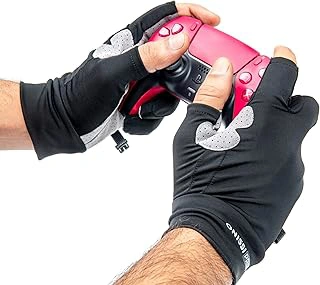
ONISSI Pro Gaming & Sim Racing Gloves for Sweaty Hands and Grip
Drivers who deal with sweaty palms during longer sessions will appreciate the ONISSI Pro's focus on airflow and moisture management. The updated design uses a lighter, more ONISSI Pro Gaming & Sim Racing Gloves for Sweaty Hands and Grip fabric across the palm and back of hand compared to the standard ONISSI model, allowing heat to escape more effectively when you're running endurance stints or racing in a warm room.
The grip pattern remains similar to the original ONISSI gloves, with silicone print across the palm and fingers that holds securely against leather or Alcantara wheel rims under direct drive force feedback. You'll notice the material feels slightly thinner, which improves tactile feedback and keeps your hands cooler but may not hold up quite as long if you're putting in dozens of hours every week. The tradeoff is clear: better comfort in warm conditions at the potential cost of a shorter lifespan compared to thicker alternatives.
Fit follows the same sizing as the standard model, with a snug but flexible cut that doesn't bunch at the fingertips or restrict wrist movement during quick countersteering. The ONISSI Pro Gaming & Sim Racing Gloves for Sweaty Hands and Grip mesh panels along the top of the hand and between the fingers do their job without creating hot spots, even during multi-hour sessions. At $24.99 with a 4.2/5 rating, the Pro variant matches the price of the original while delivering a tangible improvement in ventilation for drivers who prioritize comfort over maximum durability.
If your setup runs warm or you tend to sweat through standard gloves within the first hour, the ONISSI Pro offers a practical solution without requiring a step up in price. Just keep in mind that the thinner material may show wear sooner if you're racing daily with high-torque wheels.
- ✅ Breathable fabric reduces heat buildup during long sessions
- ✅ Silicone grip pattern holds firmly against leather and Alcantara
- ✅ Lighter material improves tactile feedback on the wheel
- ✅ Same $24.99 price as standard model
- ⚠️ Thinner material may wear faster with heavy daily use
- ⚠️ Slightly less durable than thicker glove options
Key Features to Prioritize in a Sim Racing Glove
- Silicone or rubberized palm grip that doesn't wear smooth under rotational friction
- Breathable back-of-hand fabric to prevent sweat buildup during long sessions
- SBR or gel padding in the palm to dampen vibration without killing feedback
- Reinforced stitching at high-stress zones (thumb web, finger base)
- Touchscreen compatibility on index finger and thumb for HUD adjustments
- Snug wrist closure that doesn't bunch or slide during rapid corrections
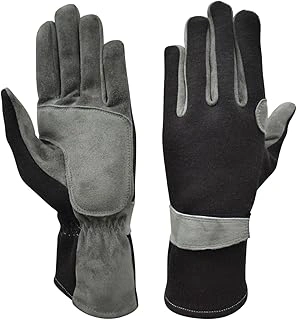
SBL Leather Nomex Fire Retardant Racing Gloves
Direct drive wheels put constant stress on glove materials, and budget karting gloves often wear through at the palms within weeks. The SBL Leather Nomex Fire Retardant Racing Gloves trade lightweight comfort for long-term durability, built with full leather palms and Nomex construction borrowed from real motorsport safety gear.
Leather palms resist abrasion far longer than synthetic suede or padded fabric, making these gloves suited to daily multi-hour sessions or aggressive FFB settings that chew through softer materials. The fire-retardant Nomex shell adds stiffness and weight compared to mesh or spandex alternatives, which means reduced breathability and a firmer feel during the first few sessions. Users report a break-in period where the gloves soften noticeably, but they remain heavier and warmer than lighter racing gloves designed for breathability.
At $41, these gloves cost roughly double the price of entry-level options, but the material durability justifies that gap if you spend hours at the wheel each week or run high-torque settings that accelerate wear. The 4.6/5 rating reflects satisfaction from users who prioritize longevity over immediate comfort, though shorter-session sim racers or those in warm environments may find the reduced ventilation less practical.
Choose the SBL gloves when durability matters more than weight and you plan to keep the same pair through hundreds of hours of use. If you prefer lighter, cooler gloves for shorter sessions or competitive racing where tactile feedback takes priority, the extra heft and warmth may outweigh the longevity advantage.
- ✅ Full leather palms resist abrasion through extended high-torque use
- ✅ Nomex fire-retardant construction adds motorsport-grade durability
- ✅ 4.6/5 rating from users prioritizing longevity
- ⚠️ Heavier and warmer than mesh or lightweight racing gloves
- ⚠️ Stiffer break-in period before materials soften
- ⚠️ $41 price point doubles cost of budget alternatives
- ⚠️ Reduced breathability compared to ventilated designs
Grip Pattern vs. Material: What Actually Matters
Grip material determines how securely your hands stay connected to the wheel during high-torque FFB events, not just how sticky the glove feels when you first put it on. Silicone dot patterns - like those on the ONISSI and STRASSE gloves - create mechanical grip through raised contact points that dig into wheel surfaces. Leather grain, as seen on the SBL pair, relies on friction coefficients that change with wear and temperature. The real question is how each material performs after hours of rotational friction against your specific wheel rim.
Silicone dots resist abrasion longer than rubberized coatings but can eventually flatten or tear free from the backing fabric, especially if the glue layer fails. Leather grain wears more predictably - it burnishes smooth over time, reducing initial bite but maintaining consistent friction. When paired with Alcantara or suede rims, silicone patterns lock aggressively but may snag fibers; leather slides smoothly while still resisting rotation. Against leather wheel wraps, both materials work, but silicone offers sharper initial grip while leather-on-leather provides a more natural, less grabby connection.
Initial tackiness fades quickly under sweat and heat. Durability matters more because a glove that loses grip after ten sessions forces you to tighten your hold, which defeats the purpose of wearing gloves at all. If you're running a high-torque direct drive wheel and need maximum lock during sudden FFB spikes, silicone dot density and backing fabric strength matter more than the dots' surface feel. If you value steering feedback clarity and prefer a grip that grows more familiar rather than less effective, leather grain offers steadier long-term performance even as it loses some of its early aggression.
Tactile feedback retention depends on palm thickness as much as grip texture. Thin silicone layers transmit wheel vibration and surface detail better than padded leather, but they also transfer more heat and leave your palms more exposed to sustained pressure. Choose grip security when you're wrestling with high FFB forces in longer races; prioritize feedback retention when you're chasing lap times in shorter stints where hand fatigue isn't the limiting factor.
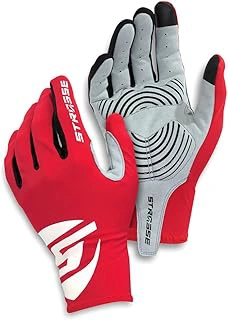
STRASSE Sim Racing Gloves - Silicone Grip Driving Gloves with Touchscreen Fingertips and SBR Padded Palm (Red, X-Large)
Endurance racers who want cushioned protection without sacrificing grip will find the STRASSE Sim Racing Gloves a practical middle ground. Priced at $36.99 with a 4.4/5 rating, these gloves use SBR padded palms to absorb vibration from high-torque direct drive wheels, reducing hand fatigue during multi-hour stints. The padding sits thick enough to dampen sustained force feedback pulses but stays thin enough to preserve steering feel - a balance the ONISSI gloves sacrifice with heavier palm reinforcement and the SBL model skips entirely in favor of minimal bulk.
The silicone grip pattern runs across the palm and fingers in raised dots, offering secure contact on leather or Alcantara rims even when hands begin to sweat. Touchscreen-compatible fingertips let you adjust pit settings or black box data without removing the gloves mid-session. The this product construction uses a stretch fabric that promotes airflow, though extended summer racing can still build heat compared to the lighter mesh panels found on less-padded alternatives.
Sizing runs slightly large, so users between sizes should consider ordering down for a snugger fit that helps reduce the chance of slippage during quick transitions. The red colorway shown is one of several available finishes. The combination of padding, grip security, and touchscreen functionality makes these gloves well-suited for drivers who prioritize comfort during long races over the thinnest possible rim feedback, though those chasing maximum sensitivity may prefer unpadded options. The SBR cushioning delivers measurable fatigue reduction without the bulkiness that compromises precision in tighter cockpits.
- ✅ SBR padded palm reduces vibration fatigue during long sessions
- ✅ Silicone grip pattern maintains secure contact on leather and Alcantara
- ✅ Touchscreen-compatible fingertips for mid-race adjustments
- ✅ Breathable stretch fabric promotes airflow
- ⚠️ Sizing runs slightly large - may need to order down
- ⚠️ Padding adds bulk compared to ultra-thin alternatives
- ⚠️ Can build heat during extended summer racing despite breathable design
Sizing and Fit: Why It's Harder Than You Think
Getting the right fit in sim racing gloves is trickier than sizing everyday gloves because you need precise finger articulation and consistent palm contact without pressure points that develop over a two-hour endurance session. Most sizing charts ask for hand circumference measured around the knuckles, but that metric alone won't tell you whether the fingers will be long enough or whether the cuff will dig into your wrist during constant steering inputs.
Stretch materials like spandex and elastane blends allow some forgiveness, but compression fit is not the same as snug fit. A glove that compresses your hand will restrict blood flow during long stints, leading to numbness and reduced sensitivity to force feedback detail. On the other hand, a glove that's too loose will bunch between your palm and the wheel rim during rapid corrections, creating hot spots and reducing your ability to hold consistent pressure through high-torque corners.
Finger length matters more in sim racing than in most other glove applications because you're constantly modulating paddle shifters and rotary encoders. If the fingertips extend past your own, they'll catch on controls. If they're too short, the material pulls back and creates tension across your knuckles. Palm fit is equally critical - too loose and the material slides during high-FFB events, too tight and you lose the ability to feel subtle wheel details that help you catch oversteer early.
When comparing the products in this guide, pay attention to whether the manufacturer specifies a compression fit or a relaxed fit, and whether their sizing runs narrow or wide across the palm. Measure both your hand circumference and your middle finger length from wrist crease to tip, then cross-reference both numbers if the brand provides a detailed chart. If you're between sizes and the glove uses a stretch fabric, sizing down usually provides better control. If the construction is less stretchy or uses thicker padding, sizing up prevents circulation issues during longer races.
Break-In Period and Longevity Expectations
New sim racing gloves often feel restrictive during the first few sessions, particularly leather and hybrid models with reinforced palms. Synthetic gloves with stretch-knit backs usually feel comfortable immediately, while full-leather or Clarino-palm designs require two to four hours of wear before the material conforms to your hand shape and grip pattern. Stiff seams near the thumb and fingers soften as the stitching relaxes, and tight wrist closures loosen slightly once the elastic or Velcro adjusts to repeated use.
Synthetic gloves typically deliver reliable grip for 100 to 200 hours of use before the palm coating begins to smooth out or peel at high-contact zones near the thumb and index finger. Leather and premium synthetic models - especially those with reinforced stitching and thicker palm layers - often reach 300 hours or more before noticeable wear. Frequent exposure to high-torque direct drive feedback accelerates degradation, as constant friction against the wheel rim abrades palm texture faster than casual use.
Hand washing in cool water with mild detergent preserves grip material better than machine washing, which can crack coatings and weaken seams. Air drying away from direct heat prevents shrinkage and maintains elasticity in stretch panels. Inspect gloves every 50 hours for thinning palm material, frayed stitching, or slick spots that compromise friction. Replace gloves before grip loss becomes noticeable during high-force corners, since reduced traction can lead to wheel slippage and loss of control during aggressive FFB spikes.
Budget gloves under twenty dollars often show wear at 60 to 80 hours, while mid-range pairs between thirty and fifty dollars balance longevity with initial cost per session. Tracking your usage hours and rotating between two pairs extends overall lifespan by allowing materials to recover between sessions.
Quick Comparison: Which Glove Fits Your Priorities
Choosing the right sim racing glove comes down to matching your budget and priorities to real differences in materials and construction. The ONISSI gloves sit at the entry point around $25 and deliver solid silicone grip with mesh panels that handle sweat better than most budget options, making them a practical choice if you want reliable palm traction without spending much. Moving up to the SBL gloves near $31 adds noticeably tougher stitching and thicker silicone coverage that holds up to daily sessions on high-torque wheels, a worthwhile step if you race frequently enough that durability becomes a cost-per-use question. The STRASSE gloves justify their $41 price tag with foam padding across the palm and base of the fingers, which smooths out vibration feedback during long stints and reduces hand fatigue when you're running endurance events or back-to-back races.
The price-to-performance curve flattens above $30 for most users. If your wheel peaks around 8 - 10 Nm and you race a few times per week, the SBL gloves offer the best balance of grip durability and breathability without paying extra for padding you may not need. Budget-focused racers who prioritize moisture control over longevity will find the ONISSI pair handles sweat well enough to stay comfortable through hour-long sessions. Step up to the STRASSE gloves when you know vibration damping matters to you - either because your direct drive wheel runs above 12 Nm or because you've noticed hand soreness after extended racing. Each tier solves a specific problem rather than simply adding features, so pick based on what actually limits your comfort or consistency behind the wheel.
Final Recommendation: Match the Glove to Your Wheel and Usage
Choosing the right sim racing glove starts with your wheel's force feedback output. Lightweight direct drive systems delivering 8 newton-meters or less let you prioritize thinner materials that preserve steering feel and thermal feedback through the rim, trading some durability for improved tactility during long sessions. High-torque setups pushing 15 newton-meters and beyond shift the priority toward reinforced palms and secure grip surfaces, even if that means sacrificing a degree of fine detail when threading the car through tight corners.
Gloves wear out faster than most sim racers expect. Palm coatings compress, stitching loosens under repeated steering corrections, and finger seams stretch when you grip hard during high-speed corrections. A glove that feels secure in month one may slip during trail braking by month four, costing you consistency and confidence when you need it most. Inspect your gloves every few weeks for smooth spots on the palm, fraying at the base of the fingers, or any loss of grip texture.
Replace gloves before they fail. Worn-out grip surfaces reduce your ability to hold the wheel through sudden force spikes, forcing you to over-grip and accelerating hand fatigue. Fresh gloves restore predictable control and let you focus on lap time instead of fighting the wheel.