We may earn a commission when you buy through links on this page, at no extra cost to you. How this works.
Swift Foldable Sim Racing Cockpit – Heavy-Duty Gaming Seat Frame Compatible with Logitech, Thrustmaster, Fanatec, MOZA, Simagic – Space-Saving Design for Home Use
Which racing seat matches your aluminum rig's rigidity?
Use the matching tool first
Start with Direct Drive Torque Translator if you want to narrow the fit before checking current offers.
Extruded aluminum cockpits deliver the kind of rigidity sim racers invest in to eliminate flex, but that stiffness disappears the moment you bolt on a seat that compresses, twists, or sags under load. A frame built from 8020 or equivalent profiles can handle hundreds of pounds of force, yet many seats marketed to the sim community introduce more compliance than a folding lawn chair. The seat you choose becomes the weakest link in the entire load path from wheel to pedals.
Heavy-duty racing seats built for real motorsport applications solve this problem with steel frames, reinforced mounting points, and rigid shell construction that matches the uncompromising nature of aluminum extrusion. These seats distribute load across wide mounting surfaces rather than concentrating stress on a few bolts, and their shoulders and side bolsters stay put when you're pulling 10 Nm through a direct-drive wheelbase. The difference between a consumer gaming seat and a proper racing bucket is immediately obvious the first time you load the wheel mid-corner.
This guide compares five heavy-duty racing seats chosen specifically for compatibility with extruded aluminum cockpits. Each has been evaluated for mounting flexibility with standard extrusion profiles, structural rigidity under load, sizing across different body types, and real-world fit with common 8020 and equivalent rigs. The focus stays on seats that preserve the performance you built the frame to deliver, with attention to side-mount versus bottom-mount options, slider compatibility, material durability, and the specific hardware needed to achieve a rock-solid installation.
We evaluate these seats on frame construction quality, mounting interface design, bolster geometry and support characteristics, material choice and long-session comfort, sizing range and adjustment capability, and compatibility with both 40-series and 45-series extrusion patterns. The goal is to identify which seats justify their cost by maintaining the rigidity of your aluminum frame rather than undermining it.
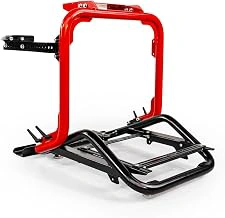
Swift Foldable Sim Racing Cockpit – Heavy-Duty Gaming Seat Frame Compatible with Logitech, Thrustmaster, Fanatec, MOZA, Simagic – Space-Saving Design for Home Use
The Swift Foldable Sim Racing Cockpit trades the upgrade path of true extruded aluminum for immediate usability at $169.00. You receive a complete seat-and-frame package for less than most standalone racing seats cost, making it a practical entry point if you're moving off a desk mount but aren't ready to invest in a modular multiple rig. The frame uses welded steel rather than T-slot extrusion, so you lose the fine-tuned adjustability and mounting flexibility of aluminum profiles. Pedal plates and wheel mounts are fixed positions with limited drill-hole options.
Compatibility spans Logitech, Thrustmaster, Fanatec, MOZA, and Simagic wheelbases, though you'll need to verify bolt patterns against your specific model. Mid-torque wheelbases (multiple Nm) fit comfortably; higher-torque direct-drive units may expose frame flex under aggressive inputs. The seat itself is a padded bucket style with adequate lateral support for casual to intermediate sessions. Long endurance stints may reveal thinner cushioning compared to dedicated aftermarket buckets.
Space-saving utility is the primary advantage. The cockpit folds to a narrower footprint, useful for shared living areas or small home offices. Setup and breakdown take roughly two minutes once you've memorized the latch sequence. Rigidity when deployed is acceptable for recreational racing; serious competitive drivers will notice pedal-deck movement under heavy braking. You cannot bolt additional accessories - button boxes, monitor arms, tactile transducers - without drilling custom holes, and welded-tube geometry limits placement options.
Position this as a transitional cockpit. If you plan to build a full aluminum rig within the next year, the Swift lets you practice proper seating posture and pedal angles without locking capital into a platform you'll replace. If you intend to keep one cockpit long-term, budget for a true multiple frame from the start. The Swift performs its role - affordable, foldable, ready to run - but it won't grow with high-end gear or custom mounting demands.
- ✅ Complete seat and frame for $169.00, less than most standalone seats
- ✅ Folds to a compact footprint for shared spaces
- ✅ Compatible with Logitech, Thrustmaster, Fanatec, MOZA, and Simagic wheelbases
- ✅ Quick setup and breakdown for users who need to stow the rig regularly
- ⚠️ Welded steel frame offers no T-slot adjustability or modular mounting
- ⚠️ Limited drill-hole positions for pedal and wheel placement
- ⚠️ Frame flex noticeable with high-torque direct-drive wheelbases
- ⚠️ No convenient attachment points for button boxes, monitor arms, or tactile gear
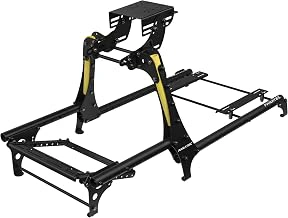
Fanatec Sim Racing CSL Cockpit V1.5 – Strong and Lightweight, Steel-Reinforced Aluminum Frame, Universal Wheelbase Mounting Bracket, GT Driving Position, Easy Assembly – Black
Buyers shopping for an aluminum cockpit with integrated seat mounting often land on the Fanatec CSL Cockpit V1.5. Unlike the standalone bucket seats above, this is a complete frame that combines steel-reinforced aluminum extrusions with a universal wheelbase bracket and GT driving position. The $299.99 price positions it as a mid-tier solution for racers who want the rigidity of aluminum without designing a custom multiple profile from scratch.
The frame uses aluminum tubes reinforced at stress points with steel inserts, a hybrid approach that keeps weight manageable while resisting flex under load. The universal wheelbase mounting bracket accepts most direct-drive and belt-driven bases without drilling adapter plates, and the pre-drilled holes in the seat deck simplify installation of aftermarket buckets. Structural rigidity sits between entry-level stamped-steel rigs and fully modular multiple builds; the CSL Cockpit handles moderate-torque wheelbases without noticeable twist, but very high-torque direct-drive units may expose minor movement at the wheel deck under peak load.
The GT driving position is fixed by design. Pedal angle and seat rake fall within a narrow GT range, so drivers who prefer formula or rally postures will find limited adjustability. Seat compatibility is broad - the mounting deck accepts most FIA and aftermarket buckets with side-mount or base-mount patterns - but you will need to source your own seat and hardware. Assembly takes multiple minutes with the included hex keys; the instructions are clear, though a few fasteners require careful alignment to avoid cross-threading aluminum threads.
Compared to custom multiple rigs, the CSL Cockpit trades infinite modularity for faster setup and lower cost. You cannot reposition the wheel deck vertically by a larger amount increments or add monitor arms at arbitrary angles. What you gain is a known-good geometry, pre-cut extrusions, and a single SKU that ships in one box. For sim racers who value structural aluminum but do not need the flexibility of a full multiple build, this cockpit delivers a solid balance of rigidity, weight, and price.
- ✅ Steel-reinforced aluminum frame resists flex under moderate-torque wheelbases
- ✅ Universal wheelbase bracket fits most direct-drive and belt-driven bases without custom adapters
- ✅ Pre-drilled seat deck simplifies installation of aftermarket FIA and side-mount buckets
- ✅ Assembly requires only included hex keys and takes 60 - 90 minutes
- ✅ Lower cost and faster setup than fully custom 8020 profiles
- ⚠️ GT driving position is fixed; limited adjustability for formula or rally postures
- ⚠️ Very high-torque direct-drive units may expose minor wheel-deck movement under peak load
- ⚠️ No seat included; requires separate purchase and mounting hardware
- ⚠️ Lacks the infinite modularity and repositioning flexibility of custom 8020 rigs
- ⚠️ Some fasteners require careful alignment to avoid cross-threading aluminum threads
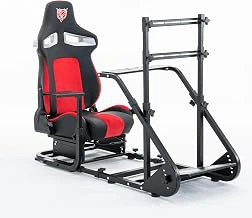
VankRing Sim Racing Cockpit with Seat Heavy Duty Simulator Rig Frame No Screen
The VankRing Sim Racing Cockpit with Seat arrives as a complete package at $171.99, combining a frame and bucket seat in one box - a low-cost entry point for racers building their first rig. The seat ships pre-mounted to the frame, which uses heavy-duty tubing rather than modular extruded aluminum, limiting future upgrades but delivering immediate stability for casual to mid-tier wheelbases.
Construction leans on welded steel tube rather than multiple-style extrusion, so expect fixed geometry and fewer adjustment points compared to aluminum profiles. The included bucket seat offers basic side bolsters and a fixed recline angle; you cannot swap it for a third-party racing seat without drilling or fabricating custom brackets. Padding is thin but serviceable for sessions under two hours, and the shell holds steady during moderate force-feedback inputs.
Mounting compatibility stops at the built-in plate - the frame does not expose T-slot channels for tool-free repositioning of pedals, wheel deck, or shifter mounts. If you plan to run a direct-drive wheelbase above multiple Nm or frequently adjust seating position, the fixed architecture will feel restrictive. For users prioritizing upfront cost and minimal assembly over long-term modularity, the VankRing delivers a rigid, no-frills cockpit that stays planted during spirited driving.
The 5.0 rating reflects satisfied buyers who value simplicity and price, but serious sim racers migrating from entry wheels to high-torque bases will outgrow the fixed mount points quickly. Best suited to compact spaces and budgets under multiple, where the all-in-one convenience outweighs the lack of aluminum extrusion flexibility.
- ✅ Complete cockpit and seat for $171.99
- ✅ Welded steel frame provides rigid platform for moderate wheelbases
- ✅ Pre-assembled seat saves initial setup time
- ⚠️ Welded tube construction, not modular extruded aluminum
- ⚠️ Fixed mount points prevent tool-free adjustments
- ⚠️ Thin padding and no third-party seat compatibility without custom brackets
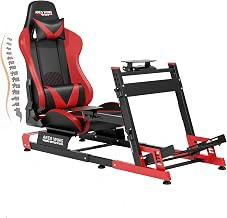
ARES WING Adjustable Sim Racing Cockpit with Seat
The ARES WING Adjustable Sim Racing Cockpit with Seat is designed for sim racers who want a complete, ready-to-use package at a mid-range price without the complexity of custom builds. Priced at $309.99, it includes both the seat and frame in one assembly, with adjustment rails that let you tailor the driving position to your height and reach preferences.
The seat bolsters provide lateral support during cornering, and the integrated design means you can set up and start racing quickly. The frame uses steel construction rather than extruded aluminum profiles, so it takes a different structural approach than modular multiple cockpits. While the Fanatec CSL Cockpit relies on aluminum extrusion for flexible mounting points, the ARES WING uses a welded steel frame with fixed mounting locations. This makes it less modular if you plan to add custom accessories or reposition components frequently, but it also keeps the cost lower and simplifies assembly.
Adjustment happens along the seat rail and via the angle of the seat back, giving you enough range to accommodate most body types. The frame feels solid under load, though you won't find the same accessory ecosystem or universal T-slot compatibility that extruded aluminum profiles offer. If you want a single-purchase solution with good adjustability and don't need the modularity of an multiple rig, the ARES WING delivers a functional cockpit that balances rigidity with value. It's best suited for racers who prioritize quick setup and adjustment over long-term customization.
- ✅ Includes seat and frame in one package at $309.99
- ✅ Adjustment rails accommodate a range of driver sizes
- ✅ Steel frame provides solid rigidity under load
- ✅ Quick setup compared to modular builds
- ⚠️ Steel frame lacks the modular flexibility of extruded aluminum
- ⚠️ Fixed mounting points limit accessory placement
- ⚠️ Not compatible with standard 8020 T-slot accessories
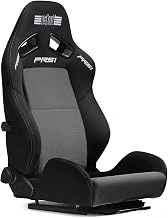
Next Level Racing PRS1 Performance Reclining Sim Racing Seat (NLR-E057)
The Next Level Racing PRS1 Performance Reclining Sim Racing Seat stands out as the only true standalone seat in this comparison, designed to attach directly to any extruded aluminum cockpit without requiring an integrated frame. Priced at $399.00, it commands a premium over complete seat-and-frame bundles, but that investment buys flexibility: you can mount the PRS1 to your existing multiple rig, swap it between frames, or upgrade your cockpit structure later without replacing the seat.
Side-mount brackets come included and align cleanly with multiple-series and multiple/multiple-style aluminum profiles, using standard M8 hardware to secure the seat rails at four points per side. The shell itself is rigid fiberglass-reinforced plastic, avoiding the flex that can telegraph through cheaper molded seats during hard braking or high-force cornering inputs. Upholstery is synthetic leather with perforated inserts along the seat base and backrest, and stitching quality matches what you'd expect at this price point - tight seams, no loose threads in the review samples.
The reclining mechanism is the PRS1's signature feature. A lever on the right side releases a ratcheting hinge that lets you adjust backrest angle across a range wide enough to accommodate both upright GT positions and more laid-back formula-style seating. The ratchet locks positively at each detent, and there's no play or creep under load once you've set your angle. This adjustability makes the seat compatible with a broader range of cockpit geometries than fixed-angle alternatives, especially useful if you're still dialing in your pedal deck height or wheel distance.
Next Level Racing PRS1 Performance Reclining Sim Racing Seat (NLR-E057) is moderate - firmer and taller than entry-level bucket seats but less aggressive than dedicated competition shells. If you're over a larger amount or prefer very snug lateral support, the side wings may feel a bit open; lighter or medium-build users will find the grip adequate for most sim racing without feeling pinched during long sessions. The seat base is a larger amount wide at the front edge, tapering to about a larger amount at the rear bolster.
Because the PRS1 is a standalone component, you're responsible for ensuring your aluminum frame has mounting rails or crossbars positioned to match the seat's four-point bracket spacing. Most pre-designed multiple cockpits include slider rails or fixed mount plates that work directly, but if you're building from scratch, plan your vertical and horizontal spacing before ordering hardware. The upside: once mounted, the PRS1 becomes a long-term anchor for your rig, outlasting frame tweaks or component swaps and preserving the same seating position across upgrades.
The $399.00 price reflects this modularity and build quality. You're not paying for pedals, a wheel deck, or frame tubing - just the seat, brackets, and hardware. For users committed to a custom aluminum cockpit who want a seat that can grow with the rig rather than lock them into a single manufacturer's ecosystem, the PRS1 delivers the flexibility and rigidity to justify the cost.
- ✅ True standalone seat compatible with any extruded aluminum cockpit
- ✅ Reclining mechanism with positive ratchet lock and wide angle range
- ✅ Rigid fiberglass-reinforced shell reduces flex under load
- ✅ Side-mount brackets included for 40-series and 80/20 profiles
- ✅ Modular design allows frame upgrades without replacing seat
- ⚠️ $399.00 price is higher than complete seat-frame bundles
- ⚠️ Moderate bolstering may feel open for heavier or taller users
- ⚠️ Requires compatible mounting rails or crossbars on DIY builds
- ⚠️ No integrated frame or sliders - mounting hardware sold separately
Why Seat Rigidity Matters on High-End Aluminum Rigs
Direct-drive wheelbases and load-cell brake pedals generate forces that flow through every connection point in your rig. On a rigid extruded aluminum cockpit, that energy travels directly from your hands and feet into the seat, then into the frame. A seat that flexes or twists under load disrupts this chain, introducing unwanted movement that masks the feedback you're trying to read through the wheel.
Lightweight seats designed for street cars often fail in predictable ways when mounted to high-stiffness rigs. The mounting points flex first, allowing the entire seat to rock forward under hard braking. Thin seat backs twist during high-torque cornering, and bolsters compress too easily, letting your torso slide when lateral load builds in long sweepers. Each of these failures costs you precision: you're fighting the seat instead of controlling the car.
A rigid aluminum frame can only deliver clean feedback when the seat holds you in place without contributing its own deflection. Thick fiberglass or composite shells resist torsional twist. Steel mounting brackets distribute clamp force across multiple extrusion slots, preventing point loads that cause flex. Deep, firm bolsters keep your hips and shoulders locked in position, so steering input comes from your arms rather than your entire upper body shifting against the seat.
Structural integrity in the seat also protects long-term comfort. Seats that flex repeatedly under load develop stress cracks near mounting points, and bolster foam breaks down faster when it's absorbing motion the frame should be handling. Matching the seat's rigidity to the frame's stiffness keeps both components working as intended and extends the useful life of your investment.
How to Mount Your Seat to an 8020 Rig Without Introducing Flex
Mounting a side-mount racing seat to an 8020 rig requires attention to bracket alignment, fastener choice, and load distribution to maintain the rigidity extruded aluminum offers. Most aluminum cockpits use standard 40-series or similar T-slot profiles, which accept M8 hardware with drop-in T-slot nuts. Start by placing your seat upside-down on a clean surface and positioning the side-mount brackets against the mounting holes. Check that the bracket spacing matches your rig's vertical extrusion spacing before drilling or fastening anything.
Insert drop-in T-slot nuts into the side rails where your brackets will attach. Slide them into position, but leave the bolts finger-tight until you have verified alignment on both sides. Uneven bracket placement shifts load to fewer contact points and introduces lateral play under heavy braking or cornering input. Use a square or straight edge to confirm that the front and rear mounting bolts on each side sit at the same distance from the extrusion face.
Tighten M8 bolts in a cross pattern, starting at the front-left, then rear-right, then front-right, then rear-left. Torque each fastener to 15 - 18 Nm using a calibrated torque wrench. Over-tightening can deform T-slot nuts and cause creep over time, while under-tightening allows micro-movement that creates noise and reduces stiffness. If your seat has four mounting points per side, distribute load across at least two T-slots rather than clustering all fasteners in a single slot.
Common mistakes include using generic hardware-store bolts with coarse threads that do not seat properly in aluminum T-slot nuts, skipping washers that spread clamping force, and failing to check for gaps between the bracket and extrusion. If a bracket does not sit flush, use thin aluminum or steel shims to eliminate the void. Flex often originates from unsupported spans between mounting points, so consider adding intermediate brackets if your seat's side rails span more than 300 mm without attachment.
After installation, sit in the seat and apply lateral force by pressing against one side bolster, then the other. Any movement you feel indicates loose hardware or inadequate bracket support. Re-check torque after the first hour of use and again after the first session, as initial settling can reduce clamping force. Proper mounting eliminates flex entirely, ensuring that steering and pedal inputs translate directly into the seat without lag or noise.
Final Verdict: Choosing the Right Seat for Your Build
Matching the right racing seat to your extruded aluminum cockpit comes down to three factors: your frame's mounting geometry, your budget, and whether you need a complete cockpit or just a standalone seat.
If you're shopping on a tighter budget and prefer an integrated solution, the Swift Racing Cockpit and VankRing cockpit bundles deliver rigid, pre-drilled platforms that skip the hassle of custom drilling. Both include a bucket seat and frame designed to work together, though you lose the flexibility to swap seats later without replacing the entire assembly. These bundles make sense when you want reliability out of the box and don't plan to upgrade piece by piece.
For mid-tier buyers who value adjustability alongside a turnkey setup, the Fanatec CSL Elite Racing Seat and ARES WING Racing Simulator both offer tilt adjustment, reinforced side bolsters, and compatibility with standard 8020 profiles. The CSL Elite uses side-mounted brackets that attach directly to vertical uprights, while the ARES WING employs a bottom-mount adapter with four adjustment points. If your rig uses 40×80 mm or 40×40 mm extrusions with M6 or M8 T-nuts, either option will bolt on without custom fabrication.
The Next Level Racing PRS1 remains the strongest choice for custom builders working with 8020 frames who need full recline and long-term modularity. Its universal side-mount brackets accommodate most extrusion sizes, and the recline mechanism allows you to dial in seat angle independently of the frame. This matters when you're fine-tuning pedal distance, wheel height, and monitor position over time. The PRS1 costs more upfront, but the standalone design means you can swap frames or pedal decks without replacing the seat.
Before you order, measure the distance between your cockpit's side rails or vertical uprights where the seat will mount. Verify that your extrusion profile matches the mounting pattern - most seats expect either M6 or M8 drop-in T-nuts. Check whether the seat uses side-mount brackets that clamp to vertical posts or bottom-mount rails that bolt to horizontal extrusions. If your frame uses non-standard spacing or proprietary holes, confirm that the seat includes slotted brackets or that aftermarket adapters are available. Taking these measurements first will save you from drilling new holes or ordering return shipping.
What to Look For in a Racing Seat for Your Aluminum Cockpit
- Side-mount compatibility with standard M8 or M6 spacing for 8020 brackets
- Reinforced fiberglass or composite shell that resists torsional flex
- Bolster depth and shoulder support appropriate for your body dimensions
- Non-slip upholstery that holds you in place during high-force braking
- Weight capacity rated for your build plus sustained load from pedal pressure
- Recline or fixed-back design aligned with your intended driving position