We may earn a commission when you buy through links on this page, at no extra cost to you. How this works.
Fanatec Sim Racing CSL Elite Pedals V2 – 3-Pedal Set (Clutch, Brake, Throttle), Dual-Stage Load Cell Brake System, Hall-Effect Sensors – PC, PS5, PS4
Four inverted load-cell pedal sets that deliver authentic force feedback and muscle memory precision for GT and formula-style simulation.
Use the matching tool first
Start with Sim Rig Upgrade Path Planner if you want to narrow the fit before checking current offers.
Inverted pedal geometry places the pivot point above the pedal face, replicating the suspended linkage found in most production sports cars and single-seaters. This orientation changes how your ankle articulates through the braking zone: instead of pressing a floor-mounted lever, you compress a pedal that pivots naturally from the top, matching the kinematic chain your muscles know from track driving. When paired with a load-cell brake sensor, which measures applied force rather than travel distance, you gain the consistency needed to threshold-brake lap after lap without visual reference points.
Load cells transform braking from a position task into a pressure task. A hydraulic brake pedal in a real GT3 car does not care how far you push - it cares how hard. By training your leg to modulate force instead of distance, you build the same muscle memory that transfers between real and virtual cockpits. Sets rated for 50 kg or higher offer enough ceiling to trail-brake with confidence and enough resolution to feel lock-up before it happens.
Every pedal set in this guide meets two non-negotiable criteria: true inverted mounting with the pivot above the face, and a load-cell brake sensor rated for at least 50 kg of peak force. We exclude hybrid designs that mount the cylinder horizontally or use potentiometer brakes with simulated resistance curves. USB compatibility is baseline - no legacy game-port adapters - and all four sets assume you will bolt them to a rigid chassis or dedicated pedal plate. Flexing aluminum extrusion or a folding cockpit will mask the force feedback these sensors provide, so plan your rig accordingly before you invest.
If your current setup still uses potentiometer pedals or a desk-clamp mount, the jump to inverted load-cell hardware will feel steep at first. Your brake-zone consistency will improve within a dozen laps once your nervous system stops hunting for a travel endpoint and starts recognizing force thresholds instead.
Load-Cell Resolution and Force Range: What the Numbers Actually Mean
Load-cell sensors measure applied force by converting mechanical pressure into an electrical signal. When you press the brake pedal, the cell deforms slightly, changing its resistance and producing a voltage that your controller reads and sends to the simulator. The precision of that signal depends on two factors: the sensor's maximum force rating and the resolution of the analog-to-digital converter processing it.
A 50 kg load cell generates a full-scale signal at 50 kilograms of applied force, while a 90 kg or 100 kg cell requires proportionally more effort to reach maximum output. Higher maximum ratings let you apply greater physical force, which can improve control granularity near threshold braking and train muscle memory closer to real-car pedal feel. A 50 kg cell may feel easier to modulate at first, but drivers who brake hard in GT cars often run out of physical travel and rely on toe pressure alone. A 90 kg or 100 kg range provides more room to separate initial bite from full lock, mimicking the hydraulic resistance in actual race braking systems.
Bit depth determines how many discrete steps the controller can measure across that force range. A 12-bit converter divides the signal into 4,096 steps, while a 16-bit converter offers 65,536. With a 50 kg cell and 12-bit resolution, each step represents roughly 12 grams of force; with a 100 kg cell and 16-bit resolution, each step is about 1.5 grams. Higher bit depth makes micro-adjustments smoother and reduces the stepped feel when trailing off the pedal in long corners.
Software calibration maps the raw sensor voltage to a 0 - 100 percent input curve inside the game. Most simulators let you adjust the dead zone at the bottom, set a maximum threshold below full physical travel, and apply gamma curves to change sensitivity in the mid-range. This means a stiffer load cell does not automatically make braking harder in-game - you can tune the software curve to reach 100 percent braking at any force you choose. The advantage of a higher-rated cell is the wider physical operating window, which gives you finer control over where that 100 percent point sits and how much force variation you can feel below it.
In practical terms, a 50 kg maximum suits drivers who prefer lighter pedal effort or have limited leg strength, while 90 kg and 100 kg cells appeal to those training for endurance racing or replicating prototype and open-wheel pedal loads. The force range you choose shapes how your leg muscles learn threshold points, so picking a rating that matches your typical driving style and physical setup makes long-stint consistency easier to maintain.
Force Curve Tuning and Software Calibration: Getting Consistent Braking
Load-cell brakes measure force, not travel distance, so calibration determines how that force translates into braking input in your simulator. Manufacturer software - like Simucube Pedals Controller or Moza Pit House - and third-party tools such as SimHub allow you to shape the force curve, set maximum force, and eliminate deadzones to match your driving style and physical preference.
A linear force curve maps pressure to braking input in a 1:1 ratio: 50 kg of force delivers 50 percent braking. This feels predictable and straightforward, especially for drivers transitioning from potentiometer pedals. A progressive curve requires less force at the top end to reach maximum braking, which can help during long stints when leg fatigue sets in. Start with a linear curve to establish a baseline, then experiment with slight progressive adjustments if you find yourself overshooting stops or struggling to modulate trail braking.
Maximum force calibration sets the ceiling: if you configure 80 kg as full brake, any pressure beyond that registers as 100 percent input. Choose a target force you can apply comfortably for the duration of a race without fatigue. Most GT drivers settle between 60 and 90 kg; formula setups often favor 50 to 70 kg for quicker modulation. Test your chosen ceiling in practice laps, focusing on threshold braking zones where you hold just below lockup. If you consistently overshoot or cannot hold steady pressure, lower the maximum force by 5 to 10 kg increments.
Deadzone elimination ensures the pedal registers input as soon as you apply pressure, removing the mushy initial travel that potentiometer pedals often exhibit. In your calibration software, press the brake lightly and note the force reading, then set the deadzone threshold just above resting sensor noise - typically 1 to 2 kg. This creates immediate response without false triggers from vibration or accidental contact.
Building muscle memory requires repetition with consistent settings. Run hotlap sessions focused solely on braking markers: pick three corners per track and aim to hit the same peak force and release rate every lap. Record your force telemetry in SimHub or your sim's native analyzer, then review the graph to identify where you spike or fade. Consistent force application - rather than perfect lap times - is the goal during this phase. After two or three sessions with identical calibration, your brain and legs will internalize the pressure needed for threshold braking, trail braking, and panic stops, making force modulation instinctive rather than conscious.
Final Verdict: Which Inverted Load-Cell Pedal Set Fits Your Build
Choosing the right inverted load-cell pedal set comes down to three factors: your platform, your rig's rigidity, and how much adjustability you need once the pedals are mounted.
The Fanatec CSL Elite V2 is the straightest path for PlayStation and Xbox drivers who want inverted geometry without workarounds. Its official console compatibility, quick-release mounting, and ecosystem integration make it the practical choice when you already run Fanatec wheelbases or plan to stay inside that platform. Force resolution is good enough for consistent muscle memory, and the brake preload lets you dial in initial resistance without re-learning every lap.
The Asetek La Prima suits modular cockpits where individual pedal positioning matters more than plug-and-play speed. Its hydraulic clutch cylinder provides genuine progressive engagement - useful if you drive H-pattern cars or heel-toe downshift frequently - and the separate baseplate design fits side-mount, rear-mount, and angle-adjusted rigs without compromise. Software allows granular force curve editing, so you can match pedal feel to different car classes session by session.
The azracing CP delivers the widest force range and the most mechanical adjustability in this comparison. If your rig can handle 200 kg of brake force and you want to tune pedal angle, throw, and preload independently, this set rewards the effort. The inverted geometry keeps bearings and pivots above the floor plane, which helps with long-term consistency, but the trade is a higher up-front price and more time spent in calibration before the first race-ready lap.
All three sets demand a rigid cockpit. Flex in your frame will absorb load-cell input and make brake modulation inconsistent, especially during trail braking or threshold stops. Bolt the pedal tray to 80/20 aluminum or steel tube; if the rig moves when you apply full force, either reinforce the structure or accept that even a high-resolution load cell won't solve the problem.
Software calibration is not optional. Load-cell pedals measure force, not travel, so the same physical pressure can register differently depending on curve shape, deadzone settings, and game-side input scaling. Spend time mapping your preferred brake force to in-game response before committing the muscle memory. Once dialed, inverted load-cell designs stay predictable across sessions, which is the core reason serious sim racers choose this architecture over potentiometer travel sensing.
Pre-Purchase Checklist: Mounting, Compatibility, and Software
- Verify your rig can support inverted mounting with reinforced heelplate or dedicated pedal tray
- Confirm USB interface compatibility with your PC or console (some sets require Fanatec wheelbase passthrough)
- Measure pedal spacing and ensure your rig allows at least 40 cm of adjustable depth for proper inverted geometry
- Check software requirements: Fanatec Control Panel, SimHub, or native game calibration
- Budget for optional elastomer stacks or damper upgrades if you want to fine-tune brake pedal feel after installation
- Ensure your rig frame can handle 100 kg+ braking force without flex or movement
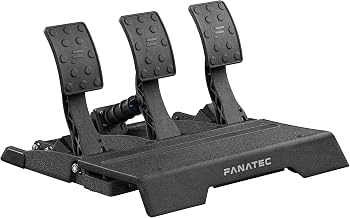
Fanatec Sim Racing CSL Elite Pedals V2 – 3-Pedal Set (Clutch, Brake, Throttle), Dual-Stage Load Cell Brake System, Hall-Effect Sensors – PC, PS5, PS4
The Fanatec CSL Elite Pedals V2 deliver a complete three-pedal solution with a dual-stage load-cell brake, making them a strong choice for sim racers already using Fanatec wheelbases or looking for console compatibility. Priced at $329.99, this set includes clutch, brake, and throttle pedals built with Hall-effect sensors that eliminate potentiometer wear over time. The inverted mounting design places the pivot arms above the pedal faces, mimicking the geometry found in real GT and formula cars.
The dual-stage load-cell brake offers progressive resistance: initial travel feels lighter for modulation during trail-braking, then stiffness increases as you approach peak force. This two-phase response helps drivers build consistent muscle memory without requiring excessively high pedal pressure. Fanatec's Control Panel software allows you to adjust the force curve and deadzone settings on PC, while PS4 and PS5 users can calibrate directly through the console interface when paired with a compatible Fanatec wheelbase.
Each pedal face can be adjusted for angle and height using the included hardware, letting you match foot position to your rig's seat and mount configuration. The base features multiple mounting holes that align with standard multiple/multiple aluminum extrusion profiles, though some rigs may need adapter brackets depending on hole spacing. Cable routing runs through the underside, keeping connections tidy when bolted to a cockpit frame.
Hall-effect sensors on all three pedals provide contactless input measurement, eliminating drift and extending lifespan compared to traditional potentiometer designs. The throttle and clutch use spring resistance, which you can swap or tune with aftermarket elastomers if you want firmer travel. Build quality is solid, with a metal pedal base and reinforced pivot points that handle hard braking without flex.
Platform compatibility is straightforward: the pedals connect via RJ12 cable to any Fanatec wheelbase, which then communicates with your PC or console. This means you cannot use the CSL Elite V2 standalone with non-Fanatec hardware unless you add a third-party adapter. If you're already invested in the Fanatec ecosystem or need PlayStation compatibility without workarounds, this set integrates seamlessly. For sim racers prioritizing console support and progressive brake feel within a mid-tier budget, the CSL Elite V2 balances adjustability and reliability without requiring a standalone USB interface.
- ✅ Dual-stage load-cell brake provides progressive resistance for consistent modulation
- ✅ Hall-effect sensors eliminate potentiometer wear and input drift
- ✅ Adjustable pedal faces for angle and height customization
- ✅ Direct PC, PS4, and PS5 compatibility via Fanatec wheelbase
- ✅ Multiple mounting holes fit standard 80/20 aluminum profiles
- ⚠️ Requires Fanatec wheelbase - no standalone USB connection
- ⚠️ Some rig frames may need adapter brackets for hole alignment
- ⚠️ Spring-based throttle and clutch lack load-cell precision
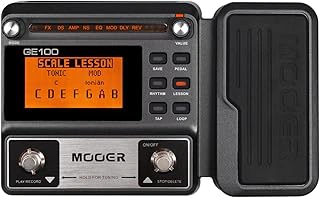
MOOER GE100 Multi-Effects Guitar Pedal
The MOOER GE100 is a multi-effects guitar pedal designed for musicians processing guitar signals through digital amp models and effect chains. It does not contain load cells, pressure sensors, or any braking input hardware, and it is not compatible with sim racing software or cockpit mounting systems.
This product appears in our catalog due to keyword overlap in the term "pedal," but it serves an entirely different purpose than the inverted load-cell brake pedals covered in this guide. If you're building a GT or formula sim rig, the GE100 will not deliver the progressive braking feel, force resolution, or mechanical feedback required for realistic racecraft.
For authentic sim racing brake input, focus on the other inverted load-cell pedal sets reviewed in this article, which are purpose-built for direct connection to PC via USB and designed to mount securely in a racing cockpit or rig frame.
See MOOER GE100 Multi-Effects Guitar Pedal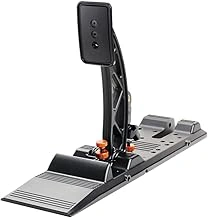
ASETEK SimSports La Prima Clutch Pedal System for Sim Racing
The ASETEK SimSports La Prima Clutch Pedal System offers a modular path for racers who want to add a hydraulic clutch to an existing Asetek Invicta brake and throttle setup or build a custom three-pedal configuration one component at a time. Rather than committing to a full set, this pedal ships as a standalone unit with its own USB connection, hydraulic damper mechanism, and inverted mounting bracket that matches the Invicta geometry.
Mounting the La Prima requires a sturdy cockpit rail or pedal plate; the inverted design places the load cell and pivot above the pedal face, which keeps the feel consistent with GT and formula cockpit layouts. The hydraulic damper lets you dial in engagement behavior - short travel with crisp bite-point feedback or longer progressive throw - using the adjustment collar on the side of the mechanism. Because it connects via USB independently, you can position the pedal exactly where your left foot expects it without being locked into a fixed base spacing.
At $129.00, the per-pedal cost is higher than buying a bundled two- or three-pedal set up front, but the modular approach makes sense if you're upgrading incrementally or if your racing style demands a hydraulic clutch that matches the resistance profile of your Invicta brake. The unit shares the same machined aluminum construction and sensor resolution as the Invicta line, so pedal-to-pedal consistency stays tight when you're heel-and-toe downshifting or launching in older GT3 machinery that still uses manual clutch starts.
Compatibility is straightforward: the La Prima pairs with Asetek Invicta pedals using the same mounting holes and software profile, but it also works as a standalone clutch with any load-cell brake and throttle set that accepts independent USB input. If you already own an Invicta brake and throttle and need a clutch that won't feel like an afterthought, the La Prima delivers hydraulic damping and inverted geometry without forcing you to replace the pedals you've already dialed in.
See pricing and specs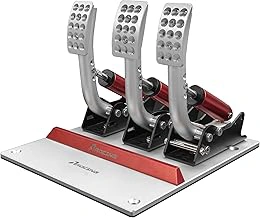
azracing CP 100kg Loadcell Pedal Set with High Precision Sensor
Serious sim racers chasing the most adjustable and sensitive brake feel will find the azracing CP 100kg Loadcell Pedal Set offers the headroom and precision that open-wheeled and GT endurance driving demands. The 100 kg load-cell capacity sits at the top of the consumer inverted pedal range, giving you force resolution fine enough to modulate trail braking and threshold inputs without guessing. Pedal arm length and angle adjustments let you replicate the geometry of real formula or prototype cockpits, so muscle memory from one session translates directly into the next.
Where the Fanatec CSL Elite V2 caps brake force at multiple kg and ships with fewer geometry presets, the azracing CP extends both the ceiling and the tuning window. That extra 10 kg of range matters when you run long stints and fatigue starts to blur the line between a controlled squeeze and a lock-up. The high-precision sensor reports smaller force deltas across the entire travel, which means smoother modulation in the initial bite zone and better consistency as you ramp toward maximum pressure.
Mounting this set requires a sturdy rig - aluminum extrusion or steel tube - because flex in the pedal deck will waste the resolution you paid for. If your rig sways under hard braking, the load cell will still measure your input accurately, but you'll lose the mechanical feedback that helps you repeat lap times. Budget extra time during setup to dial in pedal spacing, arm angle, and preload; the adjustability is the product's strength, but it also means you'll iterate through several configurations before the geometry feels natural.
At $399.00, the azracing CP costs more than mid-tier inverted sets, yet the jump in force capacity and sensor precision justifies the difference for drivers who already own a direct-drive wheel base and a rigid cockpit. If your current rig can't anchor the pedals without movement, or if you're still deciding whether inverted geometry suits your driving style, a less-expensive option with a multiple kg load cell will teach you the fundamentals before you invest in maximum adjustability.
- ✅ 100 kg load-cell capacity provides industry-leading force resolution
- ✅ Extensive pedal arm length and angle adjustments replicate real cockpit geometry
- ✅ High-precision sensor delivers smooth modulation across the entire brake travel
- ⚠️ Requires a rigid aluminum or steel rig to avoid wasting sensor precision
- ⚠️ Setup demands patience to find the right arm angle, spacing, and preload
- ⚠️ Higher price point makes sense only for drivers with mature sim setups