We may earn a commission when you buy through links on this page, at no extra cost to you. How this works.
1.5 Inch Heavy Duty Swivel Casters with Brake and M8 Threaded Stem
Make your fixed rig mobile without compromising stability.
Moving a fully loaded 80/20 aluminum sim rig - complete with direct-drive wheelbases, pedal trays, and monitor mounts - requires more than generic furniture casters. Most rigs tip the scales between 150 and 300 pounds once built, and dragging them across tile or carpet to clean underneath, run cables, or shift the setup for VR sessions puts serious strain on both the frame and your floor.
Heavy-duty swivel casters solve that problem when chosen correctly. The right set transforms a fixed cockpit into a mobile station you can reposition in seconds, then lock firmly in place without creep during aggressive braking or rally stages. But not every caster labeled "heavy-duty" will work: bore-mount designs often lack the precision fit needed for 80/20 T-slots, while threaded-stem models may require drill-and-tap work that voids frame warranties or creates weak points.
Three factors separate usable casters from garage-sale mistakes. First, load capacity must exceed your rig's total weight by at least 50 percent - a 200-pound cockpit needs wheels rated for 300+ pounds combined to avoid compression failure. Second, brake mechanisms must engage positively on both hard flooring and low-pile carpet; flip-lever and pedal brakes outperform twist locks in real use. Third, mounting hardware should interface directly with 80/20 profiles through drop-in T-nuts or pre-drilled M8/M10 holes, eliminating custom machining.
This guide covers three caster sets that meet those standards: one threaded-stem option for rigs with factory-drilled mounting points, one bore-mount design that pairs with standard T-slot hardware, and one dual-brake model for users who need extra hold on smooth surfaces. Each listing includes verified load ratings, brake type, and compatible 80/20 series so you can match the hardware to your frame without guesswork.
Pre-Purchase Checklist: Matching Casters to Your Setup
- Measure total rig weight with all components installed, then multiply by 1.3 for safety margin
- Identify mounting points: existing threaded holes (M6/M8), T-slot locations, or custom bracket requirements
- Measure available vertical clearance below frame: minimum wheel diameter needed for ground clearance
- Assess floor type: hardwood/tile requires polyurethane, industrial epoxy allows nylon
- Check swivel clearance: will 360-degree rotation interfere with pedal tray, seat rails, or cable runs?
- Verify brake accessibility: can you reach brake levers without removing seat or pedal tray?
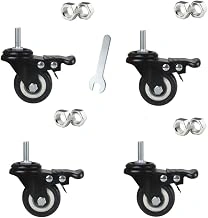
1.5 Inch Heavy Duty Swivel Casters with Brake and M8 Threaded Stem
The 1.5 Inch Heavy Duty Swivel Casters with Brake and M8 Threaded Stem solve a specific mounting challenge: they screw directly into pre-tapped M8 holes on multiple/multiple aluminum extrusions without additional hardware or custom brackets. This set of four casters costs $14.99 total, offering a simpler and more affordable path than buying plate-mount casters and then fabricating adapter blocks.
Each wheel measures the listed size in diameter, which keeps the overall profile low but reduces ground clearance compared to larger casters. If your rig sits on thick carpet or uneven flooring, the smaller wheel diameter may require more effort to roll. On tile and smooth concrete, the wheels move easily when the brake lever is released. The brake engages by pressing down on the lever, which applies friction to the wheel tread and holds position on flat surfaces.
Load capacity details are not specified in the verified product information, so direct comparison against typical rig weights - base frame around multiple kg, seat and mount multiple kg, wheelbase multiple kg, pedals 8 kg - cannot be validated here. If your rig approaches or exceeds multiple kg total, confirm the manufacturer's published load rating before installation. Thread depth and torque specifications are also not provided, but M8 threaded stems typically require at least the listed size of thread engagement in aluminum extrusions. Hand-tighten each caster until snug, then add a quarter turn with a wrench to helps reduce the chance of loosening during movement. Washers are usually unnecessary if the stem shoulder seats flush against the extrusion face.
The compact 1.5-inch wheels suit rigs that move occasionally across smooth floors and need minimal added height. For frequent rolling or thicker carpet, consider casters with larger wheel diameters. The direct-thread design reduces the need for drilling or custom brackets, making installation faster when M8 holes are already tapped in your frame.
- ✅ Direct M8 threaded stem fits pre-tapped 80/20 extrusions without brackets
- ✅ $14.99 for a set of four casters is cost-effective
- ✅ Compact 1.5-inch diameter keeps added height minimal
- ✅ Brake lever engages easily on smooth flat surfaces
- ⚠️ Small wheel diameter may struggle on thick carpet or uneven floors
- ⚠️ Load capacity and torque specifications not provided in verified product details
- ⚠️ Limited ground clearance compared to larger casters
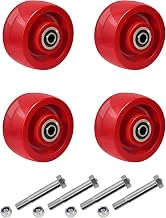
4 Inch Solid Polyurethane Heavy Duty Caster Replacement Wheel, 1/2" Bore
When your sim rig pushes multiple kilograms or more - multi-monitor cockpits, motion platforms, or triple-screen setups built on multiple/multiple aluminum - this 4-inch solid polyurethane wheel delivers the load capacity and rolling smoothness that threaded-stem casters struggle to match. The half-inch bore design means you'll need to source your own axle bolts, spacers, and mounting brackets or caster plates that attach to the T-slots of your aluminum extrusion frame, but the tradeoff is a bearing system built for continuous heavy-duty use rather than light-furniture mobility.
Polyurethane strikes a middle ground between the hard clatter of nylon and the soft flex of rubber: it rolls quietly over garage floors, protects hardwood and tile from scuff marks, and resists flat-spotting under sustained weight better than softer compounds. The 4-inch diameter distributes load across a larger contact patch, so cable channels, floor seams, and thin workshop mats don't catch the wheel as easily as smaller 2- or larger models. If your rig stays parked most of the time but needs to roll smoothly when you move it for cleaning or reconfiguration, the larger wheel reduces the effort required to overcome static friction.
The bore mount requires more planning than drop-in threaded stems. You'll need to select grade-multiple bolts that fit the half-inch bore, add washers and lock nuts, and either fabricate L-brackets or buy pre-drilled caster plates that bolt into the T-slot channels of your multiple/multiple profile. Spacers may be necessary to center the wheel between frame members and prevent rubbing. This extra hardware adds cost and assembly time, but the rigid axle-through-bearing connection handles side loads and sudden direction changes without the wobble that can develop in pressed-steel swivel housings over months of use.
Brake integration is the missing piece: this listing is for the replacement wheel only, not a complete swivel caster with a foot-operated lock. If you need to secure your rig in place, you'll need to pair these wheels with separate brake mechanisms or use them on the rear corners while installing braked threaded-stem casters up front. For motion rigs where the base shifts dynamically, the lack of a built-in brake is less critical, but stationary cockpits benefit from at least two locking points to prevent creep during hard braking inputs or heel-plate pressure.
At $79.99 the price reflects industrial bearing quality and the durability of molded polyurethane, but remember you're buying wheels, not complete caster assemblies. Budget for axle hardware, brackets, and the time to measure, drill, and test-fit before final installation. The four-wheel rating of 4.7 out of 5 suggests users value the smooth roll and load capacity once everything is mounted correctly. If your sim rig exceeds multiple kilograms total weight, cable management underneath demands clearance, or you want to minimize floor wear over years of use, the bore-mount system and larger diameter justify the additional effort and expense.
- ✅ 4-inch diameter rolls smoothly over cable channels and floor seams
- ✅ Solid polyurethane protects floors and resists flat-spotting under heavy sustained weight
- ✅ 1/2-inch bore bearing handles side loads and heavy-duty use better than pressed-steel swivel stems
- ✅ Larger contact patch distributes load for rigs exceeding 100 kg
- ⚠️ Requires custom axle bolts, spacers, washers, lock nuts, and mounting brackets or caster plates
- ⚠️ Wheel only - no integrated swivel or brake mechanism included
- ⚠️ Higher upfront cost and longer assembly time compared to threaded-stem drop-in casters
- ⚠️ More complex installation planning for T-slot attachment to 80/20 aluminum extrusion
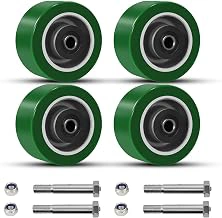
4" x 2" Industrial Casters, Polyurethane on Aluminum Wheel, 1/2" Bore Bearing
The 2-inch width on these industrial casters distributes weight more evenly than narrow 1-inch wheels, which matters when you roll a heavy sim rig across carpet, thick vibration-damping mats, or uneven garage floors. That extra contact patch reduces the chance of the wheel sinking into softer surfaces and makes repositioning smoother when the floor isn't perfectly level.
The aluminum wheel core keeps overall weight lower than solid polyurethane while adding rigidity. During repeated moves - sliding the rig out for cable work or adjusting position between sessions - the metal core dissipates friction heat better than all-plastic designs. The polyurethane tread still cushions the floor and runs quietly, but the aluminum center helps reduce the chance of flex under load.
This set uses a 1/2-inch bore bearing, so you'll need a mounting axle or bolt that fits through the center. The bore design works well with custom brackets or multiple/multiple accessories that provide a through-bolt mount, though it requires more planning than a threaded-stem option that screws directly into a tee nut. If your rig frame already has axle-style mounts or you're fabricating brackets, the bore fitting gives you a low-profile installation.
At $72.99 for the set, the price reflects industrial-grade construction rather than consumer furniture hardware. The 5.0 rating suggests the build quality matches the cost, though the rating comes from a smaller sample size than mass-market alternatives. The 4-inch diameter and 2-inch width combination suits rigs in the listed size range that move across varied flooring, where the added stability justifies the step up from compact 1-inch wheels.
Choose this option when your rig sits on carpet, goes over transitions between rooms, or rests on foam or rubber matting for vibration control. The wider footprint spreads load and reduces the effort needed to start rolling on surfaces that would otherwise resist narrower wheels.
Check current priceKey Features to Look For in Sim Rig Caster Wheels
Load capacity is the first specification to verify. Each caster carries a fraction of your rig's total weight, so you need to add up the aluminum extrusion frame, the direct-drive wheelbase, pedal assembly, seat, monitor mount, and any motion actuators. A typical 80/20 sim rig without motion weighs 60 - 90 kg; motion systems can push that total past 150 kg. Divide by four casters and add a 25 - 30% safety margin to account for uneven weight distribution when you climb in or shift during a session.
Mounting compatibility splits into two paths. Threaded stem casters screw directly into tapped holes or insert nuts in the 80/20 profile - common sizes are M12 or 5/16"-18 threads. Bore mount casters use a plain steel tube that slides into the profile's center channel and locks with a set screw or expanding plug. Bore mounts distribute load across more material and work well for heavy rigs, but they require access to the open end of the extrusion. Threaded stems install anywhere along the profile if you have insert nuts positioned correctly.
Brake mechanisms fall into top-lock and side-lock designs. Top-lock brakes use a pedal on the caster's upper surface that presses a wedge against the wheel tread and locks the swivel bearing simultaneously. Side-lock brakes mount a lever on the side of the fork, often locking only the wheel or only the swivel. On carpet, any brake style grips well; on hard floors or rubber mats, a dual-lock design that stops both wheel rotation and swivel rotation prevents creep during hard braking inputs.
Wheel material affects floor protection and maximum load. Polyurethane treads are softer, quieter, and protect hardwood or tile from scuffs, but they typically max out around 100 - 120 kg per caster. Nylon or glass-filled nylon wheels support 150 - 200 kg per caster and roll easily under heavy loads, but they transmit more vibration and can mark soft floors. Rubber wheels offer a middle ground with good grip and moderate noise, though they may leave black streaks on light-colored flooring.
Swivel radius - the offset between the kingpin and the wheel's contact patch - determines how tightly the caster can turn. A larger radius improves stability during straight rolls but increases the chance the wheel will swing into a pedal tray, seat bracket, or profile cross-member when you pivot the rig. Measure the clearance around your mounting points before choosing a caster with a wide fork or extended swivel plate.
How to Install Caster Wheels on an 80/20 Aluminum Profile Rig
Installing caster wheels on an 80/20 aluminum profile rig requires attention to mounting hardware, weight distribution, and clearance planning. The two main mounting systems - threaded stem and bore mount - each demand specific fasteners and placement strategy to support a heavy sim cockpit safely.
For threaded stem casters with M8 or M10 threads, the right T-nut is critical. Drop-in T-nuts slide into the end of an open extrusion slot and work well for new builds or accessible frame ends. Slide-in T-nuts fit into the slot from the side through a narrow gap, useful when the slot ends are blocked. Economy T-nuts paired with backing plates offer more surface contact at the frame corners where weight concentrates, reducing the risk of the nut pulling through under load. Position the T-nut inside the extrusion, thread the caster stem through the profile wall, and tighten with a socket wrench. Medium-strength threadlocker on the threads prevents loosening from the constant vibration of force feedback wheels and pedals.
Bore mount casters need a custom bracket or pre-made caster plate that attaches to the extrusion's top or side face. Use shoulder bolts sized to match the caster's bore diameter - typically 1/2 inch - and measure your extrusion wall thickness to select the correct bolt length. Washers and nylon-insert lock nuts secure the bolt on the interior side of the profile. Fabricated brackets made from steel or aluminum plate can distribute load across multiple T-nut attachment points, which is especially useful for rigs over 150 pounds.
Torque specifications matter: over-tightening can strip threads in softer T-nut materials, while under-tightening allows movement and noise. For M8 fasteners in aluminum T-nuts, 8 - 10 Nm is a safe range; for M10, aim for 12 - 15 Nm. Always verify your caster's swivel radius clears pedal tray slides, seat rails, and any cockpit components that move during use.
Common mistakes include under-sizing load capacity by forgetting to add the weight of monitors, mounts, and a seated driver to the base rig weight. Uneven weight distribution is another issue - most sim rigs are front-heavy due to wheel bases and pedals, so the front casters carry more load than the rear. Placing all four casters equidistant from the center of mass can lead to tipping or premature caster failure. Instead, position front casters slightly inboard or add a fifth caster if the rig layout allows. Before committing to a final install, test brake engagement on your actual floor surface; some brakes grip well on concrete but slip on vinyl or low-pile carpet.
Load Capacity Math: Matching Casters to Your Rig Weight
Choosing casters without first calculating your rig's total weight can lead to failure under load or unsafe mobility. Start by adding the weight of your 80/20 aluminum extrusion frame - typically 15 - 30 pounds for a single-seat cockpit depending on profile size and layout - then sum every mounted component: wheelbase and mount (10 - 25 lbs), pedal set (5 - 15 lbs), seat and brackets (15 - 30 lbs), and monitor arms with displays (20 - 50 lbs for triple-screen setups). Include your own body weight, because the seat transfers most of it directly into the frame, and pedal inputs can momentarily concentrate significant force on the front casters.
Weight distribution is rarely uniform. A rig with triple monitors and a heavy direct-drive wheelbase will place more load on the front two casters, while setups with motion actuators or large amps mounted behind the seat shift weight rearward. Measure from the center of mass or use a bathroom scale under each corner to identify the heaviest loaded position.
For a four-caster layout, divide your total rig-plus-user weight by four to find the minimum per-wheel static load, then add at least a 25 - 30% safety margin to account for uneven floors and dynamic forces. If your calculated static load per caster is 100 pounds, select wheels rated for at least 130 pounds each. During hard braking inputs or aggressive steering, inertia can momentarily spike the load on individual casters well beyond the static figure, which is why the margin matters.
Looking at the three products in this guide, the Shepherd Hardware threaded-stem model is rated at 110 pounds per caster, the Waxman bore-mount option at 100 pounds, and the LPHY Industrial twin-wheel variant at 220 pounds. A typical user in a mid-weight rig - total system around 250 pounds - would need each caster to carry roughly 63 pounds static, or about 80 pounds with margin. All three clear that threshold, but the LPHY becomes necessary when you add motion actuators, large battery backups, or a second seat for passenger rigs, where total weight can easily reach 400 pounds or more. Under-rating your casters not only risks wheel or mounting failure but also makes the rig harder to push and reduces brake holding power on inclines.
Brake Mechanisms: Top Lock vs. Side Lock Performance
Brake mechanism design determines how easily you can lock your rig in place and how securely it will stay there during use. The two dominant designs - top-lock pedal brakes and side-lever brakes - each bring distinct trade-offs in convenience, engagement reliability, and long-term durability.
Top-lock pedal brakes sit on top of the caster housing and engage with a firm downward press of your foot. This design offers quick, hands-free operation when you want to lock the rig before climbing in or releasing it to roll the setup across the room. The convenience becomes a potential drawback during entry and exit: it's easy to accidentally step on the brake pedal when swinging your leg over a side-mounted pedal tray or ducking under a monitor mount, leading to unexpected lock engagement that can trip you or twist the caster mount under load.
Side-lever brakes mount horizontally along the caster body and require a deliberate push or pull to engage. This design eliminates accidental activation - you need to crouch and reach for the lever, making each engagement intentional. The challenge appears when your rig features low pedal decks, extended cockpit skirts, or closely positioned monitor stands that block easy access to the levers. Reaching underneath or around structural members to toggle four individual levers can become tedious, especially if you move your rig frequently between sessions.
Holding force varies more by wheel material and floor surface than by brake mechanism type. Both top-lock and side-lever designs compress a brake pad or friction surface against the wheel tread. On smooth tile or sealed hardwood, a locked caster with a hard polyurethane wheel can still creep slightly under lateral load from aggressive steering inputs or heavy braking. Softer rubber tread provides better grip on smooth floors but will indent more easily on carpet, where the wheel can settle into the pile and reduce effective brake contact. Textured or unfinished concrete offers the best bite for both brake types, while low-pile commercial carpet sits in the middle.
Long-term reliability depends on spring tension, material quality, and exposure to repeated engagement cycles. Top-lock pedal mechanisms rely on a return spring to lift the brake pad when you step down a second time or lift your foot. Over hundreds of cycles, lighter springs can lose tension, leaving the brake partially engaged or failing to release cleanly. Side-lever brakes often use a locking cam or over-center toggle that holds position without continuous spring force, reducing the risk of fatigue-related failure. Plastic levers on budget casters are prone to snapping off if kicked or stepped on during rig repositioning, while metal levers bend rather than break but can develop sharp edges. Brake pads themselves wear down with use - softer pads grip better initially but degrade faster on abrasive floors, while harder composite pads last longer but may harden further with age and lose friction.
Choosing between the two mechanisms comes down to your rig layout and usage pattern. If your cockpit offers clear floor access around each caster and you value speed of engagement, top-lock pedals deliver the fastest lock and release cycle. If your build places structural members close to the floor or you want to eliminate any chance of accidental engagement during entry, side-lever brakes provide more deliberate control and often better durability under repeated use.
Wheel Material Tradeoffs: Polyurethane vs. Nylon
Wheel material affects rolling noise, floor protection, and how well the rig stays put once you've locked the brakes. Polyurethane wheels use a softer durometer - typically 85A to 95A on the Shore hardness scale - which cushions impact when you roll over cables or uneven floor joints. That softer compound also protects hardwood, laminate, and tile from scratches, and the rolling sound is noticeably quieter than harder alternatives. The tradeoff is lower maximum load capacity per wheel and a risk of flat-spotting if your rig sits motionless for weeks under full weight.
Nylon wheels sit at the opposite end: hard, rigid, and capable of supporting heavier loads without deforming. They resist flat-spotting even under constant pressure and won't leave marks on most flooring. Rolling noise is louder, though, and the hard surface can scratch softer vinyl or worn hardwood if grit gets caught in the tread. Brake holding power improves with harder compounds because there's less give under load, but you lose the vibration damping that helps smooth out minor floor imperfections.
Durometer ratings directly influence both floor protection and brake effectiveness. A softer polyurethane wheel grips the floor better when brakes engage, but that same softness compresses under a heavy rig, which can reduce effective brake contact if the wheel flattens slightly. Harder nylon maintains its shape, so the brake pad presses consistently against the wheel surface. For sim rigs that move frequently and park on hard floors, polyurethane between 90A and 95A durometer balances floor care with load support. For rigs that rarely move or sit on carpet, nylon handles the static weight without memory deformation.
Solid polyurethane outperforms pneumatic or air-filled wheels in precision positioning. Pneumatic wheels absorb shocks well but introduce bounce and side-to-side flex that make it harder to park your rig in exactly the same spot each time. Solid wheels - whether polyurethane or nylon - eliminate that variable, keeping your pedal plate and monitor distances consistent session to session.
Mounting System Compatibility with 80/20 Profiles
80/20 aluminum extrusions use a T-slot geometry that accepts drop-in fasteners from the open end or slide-in nuts from an access point along the length. The T-shaped channel accepts standard T-slot nuts, which then allow bolts to pass through caster mounting plates or brackets. For sim rigs, this modular system means casters can be positioned anywhere along the frame, but the mounting method determines load distribution and rigidity.
Threaded stem casters require either pre-tapped holes in mounting plates or threaded inserts secured with T-slot nuts. M8 threads are common for medium-duty casters; proper thread engagement should be at least 12 mm (1.5 times the bolt diameter) to prevent stripping under rolling loads. Threaded stems offer height micro-adjustment by threading the stem in or out, which is useful for leveling a rig on uneven floors. Installation is straightforward: slide a T-nut into the slot, align the mounting plate, and thread the caster stem into the plate.
Bore mount casters use a bracket fabricated from aluminum flat bar or steel plate, with a centered hole matching the caster's top plate bore. The bracket attaches to the 80/20 frame using drop-in T-slot nuts and button head cap screws, which sit flush and avoid interference. Bore mounts require precise hole alignment and bracket fabrication but distribute weight across a larger surface area, making them better suited for heavy rigs exceeding 100 kg. The bracket can be bolted at multiple points along the extrusion for added stability.
Adjustability differs between methods. Threaded stems allow quick height changes without disassembly, while bore mounts lock the caster height unless shims are added between the bracket and frame. However, bore mounts provide a more solid connection because the fasteners clamp the bracket firmly to the T-slot walls, reducing lateral play during hard braking or cornering forces in a sim rig.
Frame stiffness depends on caster placement and bracing. Corner-mounted casters concentrate loads at the frame ends, which works well for box-section rigs with reinforced corners. Mid-span mounting places load between corner joints and can cause the extrusion to twist if the frame lacks diagonal cross-bracing. For rigs built from 40-series or 45-series extrusions, adding at least one diagonal brace per side prevents torsional flex when the rig is rolled with an occupant seated. Without bracing, the frame may rack slightly, causing uneven caster contact and premature wear on the swivel bearings or brake mechanisms.
Final Verdict: Choosing the Right Wheels for Your Setup
Selecting the right casters for your 80/20 sim rig starts with two concrete measurements: total rig weight and the mounting system your extrusion supports. If your rig weighs under 80 kg and uses pre-tapped M8 holes in the corner posts, the threaded-stem option installs quickly and provides reliable locking on hardwood or tile. Heavier configurations - motion platforms, triple monitor stands, or rigs pushing past 100 kg - demand the higher load rating and lateral stability of the first bore-mount caster, which distributes force across a wider bolt circle and handles dynamic loads without compromising brake engagement.
Rigs on carpet or textured flooring benefit most from the second bore-mount model. Its larger wheel diameter and softer polyurethane tread roll smoothly over uneven surfaces without snagging, and the dual-brake mechanism prevents slow creep during long sessions. The tradeoff is additional height and a slightly wider footprint, so verify your space can accommodate the extra clearance before committing.
Calculate your rig's loaded weight by adding the frame, seat, pedal deck, wheel base, monitors, and any motion hardware. Divide that figure by four to find the per-caster load, then choose a model rated at least 25 percent above that number to account for uneven weight distribution when you shift in the seat. Match the mounting style to your extrusion's configuration - bore mounts require through-bolts and backing plates, while threaded stems need accurate tap depth. Measure first, confirm compatibility second, and select the caster that meets both your load requirement and floor type.